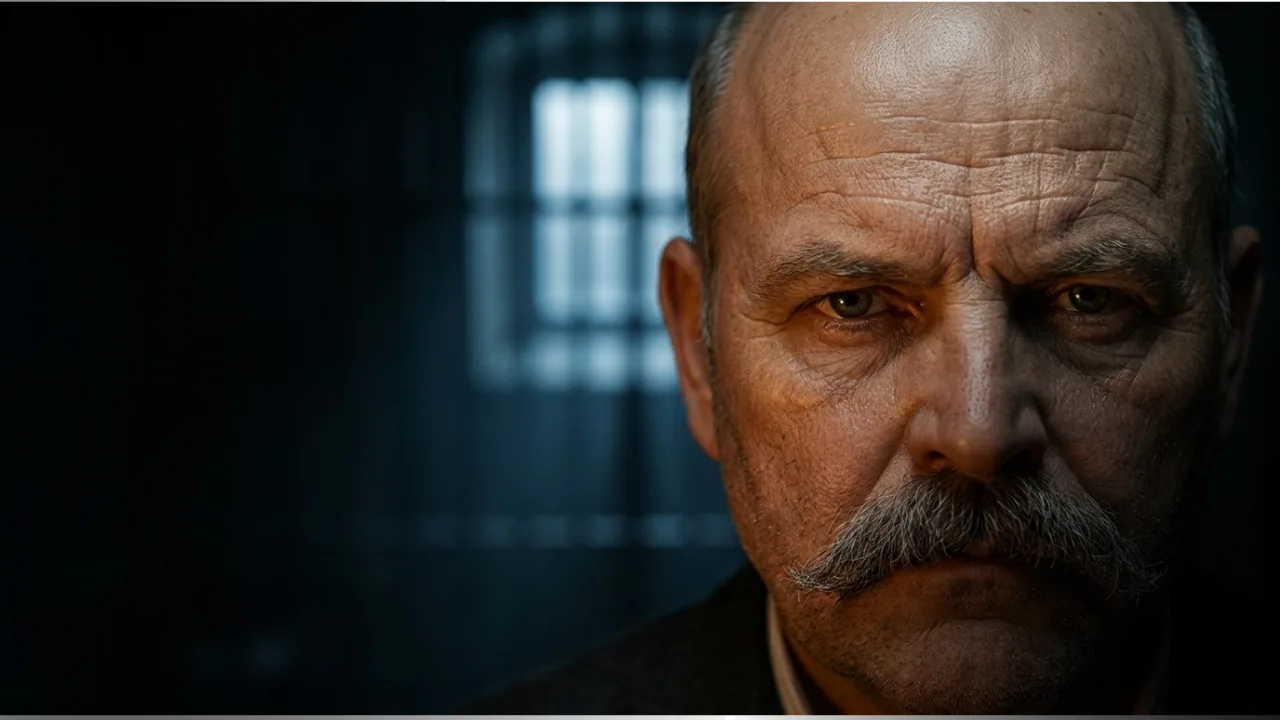
Max Planck: The Man Who Lost Everything and Kept Working
There is a question physics has never answered: how much suffering fits inside a single life before it stops working?
Max Planck lost his wife, all four children of his first marriage, the house he had lived in for four decades, the manuscripts of an entire career, and the country he believed in. He did not come through any of it intact. He did not defeat grief, did not find a formula for enduring it, did not emerge stronger. Max Planck broke.
The extraordinary thing is not that he stayed standing. It is that, broken, he kept showing up for work.
▶️ Prefer to watch? This story is a full video documentary, with original imagery and score, on the Zigurat channel: https://youtu.be/eSQ_1YEpLYw
The music room in Grunewald
Before the losses, there was a room. In the Berlin district of Grunewald, the Planck house filled regularly with scientists, professors, musicians and students. Max sat at the piano. His son Erwin played cello. On some evenings Albert Einstein turned up with his violin.
The severe man of the official portraits conducted choirs, hosted musical evenings and climbed mountains. According to the Max Planck Society itself, it was among his family that he felt "completely human and at ease." Lise Meitner would remember watching him play tag with students and children, with an enthusiasm no one would have suspected of the president of German science.
Hold on to that room. Almost everything that follows consists of emptying it.
"Don't study physics"
Planck was born in Kiel on 23 April 1858, into a Prussian line of jurists, professors and theologians — a family where duty, discipline and service were not rhetorical ornaments but a way of living.
In his youth his most obvious talent was not science but music. He played piano and organ, sang, and seriously considered a musical career. He chose physics for the same reason another man might choose philosophy or theology: he wanted to find some permanent order behind a world that would not stop changing.
In Munich, in 1874, at 16, he approached Professor Philipp von Jolly for advice. The answer became famous: don't study physics, because almost everything in the field had already been discovered; only a few gaps remained to be filled. Planck replied that this was not a problem — he had no intention of discovering anything new. He only wanted to understand the foundations of what already existed.
Hidden inside one of those "gaps to be filled" was the whole of twentieth-century physics.
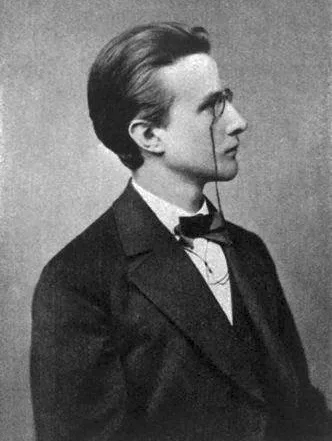
The road there was anything but glorious. After his doctorate, Planck spent roughly five years lecturing without a regular salary, living with his parents in Munich and feeling guilty for depending on them. A grown, highly educated man building a career in a field his own professor had declared closed. Only in 1885 did he obtain a post in Kiel; only in 1887, with some stability, did he marry Marie Merck.
They had four children: Karl, the eldest, in 1888; the twins Emma and Grete in 1889; and Erwin, the youngest, in 1893.
An act of desperation
The problem that came to consume him had a strange name: black-body radiation — the light emitted by heated objects. It looked simple. It was not. Two formulas competed to describe it, and each got only half the universe right. Wien's law, the pride of German physics, handled short wavelengths well and failed in the infrared. Rayleigh's law worked precisely in the infrared but, as frequency rose, predicted infinite energy: by that calculation, any heated object should incinerate the universe.
The turn came on a Sunday. On 7 October 1900, his colleague Heinrich Rubens came to tea in Grunewald and mentioned that his new measurements at very long wavelengths did not match the German formula. That night, after the visitor left, Planck sat at his desk and wrote an equation stitching the two broken halves together. He sent the result to Rubens on a postcard.
It worked. It matched every data point, at every colour, perfectly. Planck simply had no idea why.
It took him two months to find out. On 14 December 1900, before the German Physical Society, he presented an explanation that contradicted everything he believed: energy is not emitted continuously, but in minimal, indivisible packets. Quanta. To describe them he introduced a constant written as a lowercase letter: h.
Years later, in a letter to Robert W. Wood, he would call that decision "an act of desperation" — not because he knew he was launching a revolution, but because he had found no other way to make the numbers agree with reality.
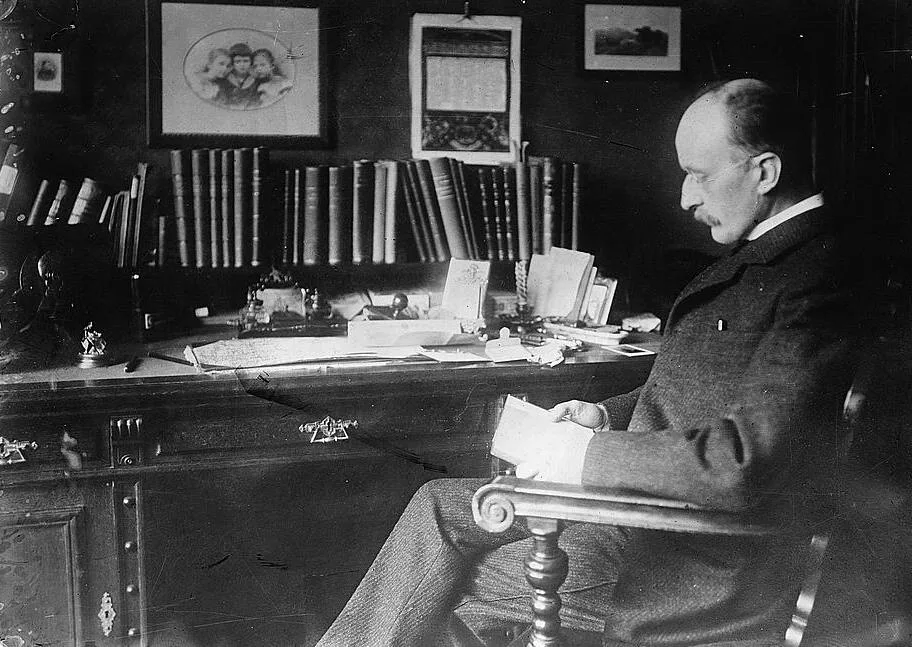
Here lies the first great irony of his life. Max Planck was no revolutionary. He liked what had been tested, trusted tradition, distrusted rupture. He spent years trying to limit, reinterpret and even eliminate the consequences of his own discovery. He failed. The man who wanted to preserve the old physics had opened the door through which it would be destroyed.
In 1905, an unknown clerk in a Swiss patent office took the quanta far further than Planck wanted. Planck could have treated him as a threat; instead he recognised his talent, defended his work and helped bring him to Berlin. Scientifically they disagreed on deep questions. Personally, they played together: Planck at the piano, Einstein on violin, Erwin on cello.
1909: the first empty chair
In 1909, after 22 years of marriage, Marie died — probably of tuberculosis. For months the house lived with the coughing, the fevers and the hope that the air of some sanatorium might save her. It did not.
There is no record of a public collapse. No scene. Planck did what he had been trained to do since childhood: he organised the next day. Back to the schedule, the lectures, the work. That does not mean he felt less. It means discipline was the only language of survival he knew.
Two years later he married Marga von Hößlin, Marie's niece, with whom he had a son, Hermann. He did not erase the previous family or replace the people he had lost; he built something around the absences. For a few years, the structure seemed to hold.
Verdun, and then the twins
In 1914 Planck signed, alongside other German intellectuals, the Manifesto of the Ninety-Three in defence of his country — a position he later distanced himself from. Like millions of Europeans, he confused patriotism, duty and truth. The war was not only something that happened to his family; it was also something he believed in. That makes what followed considerably harder.
Karl, the eldest, was sent to the western front and died near Verdun in 1916. Planck was 58. There was no institutional pause in which a father might understand what had happened: there were lectures, meetings, correspondence, decisions. The day after the tragedy, the world still required him to function.
In 1917 Grete died giving birth to her first daughter. The baby survived. Emma, her twin, then married her sister's widower and took over raising the child — an attempt to rebuild a family out of what was left of the previous one. In 1919 Emma became pregnant. And died in childbirth, exactly as her sister had. Her daughter also survived.
Both twins died the same way, two years apart, leaving two girls who would grow up without mothers.
It was in that interval that the highest recognition of his career arrived: the 1918 Nobel Prize in Physics, presented the following year. There was no clean moment where the suffering ended and the celebration began. Letters of tribute arrived while the family arranged funerals.
People call this resilience. But the word misleads: it suggests some superhuman strength, someone who absorbs loss without being changed by it. That was not it. Planck worked because work told him what to do during the hours when he did not know how to go on being a father.
The patriarch and the tyrant
In 1933 Hitler came to power. Jewish scientists were expelled, books were burned, and former colleagues such as Philipp Lenard and Johannes Stark began attacking so-called "Jewish physics." Einstein left Germany and never returned.
Planck was 75 and president of the Kaiser Wilhelm Society. He could have left. He chose to stay.
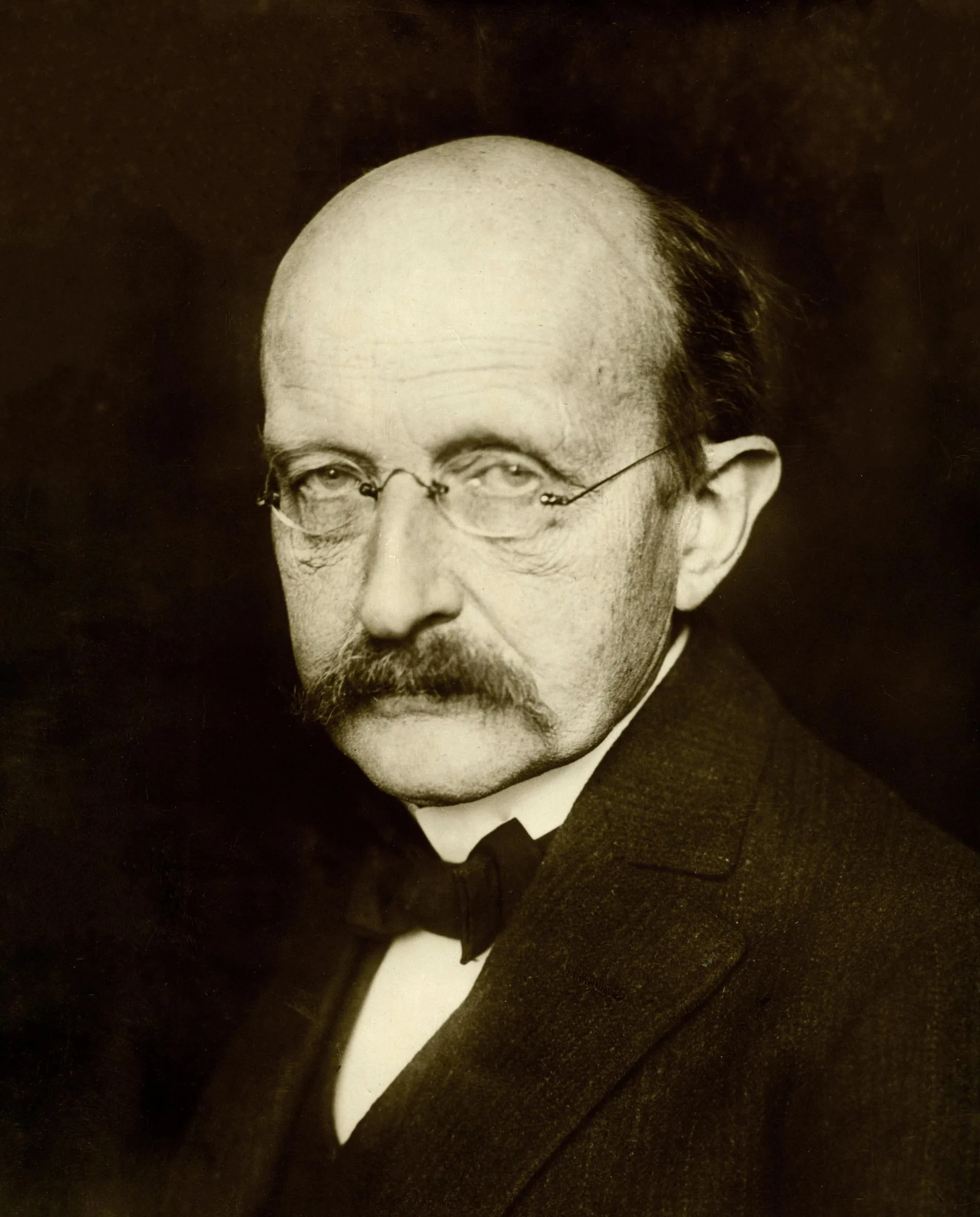
For decades that choice has been told two ways. To some, he stayed to protect scientists and preserve institutions. To others, he stayed because he was too conservative to grasp the nature of the regime. Both are probably true. He tried to help threatened people, tried to keep institutes running, tried to stop German science from being wholly captured. But he also believed, for far too long, that the state would still obey some limit. The man who trusted structures was slow to see that the entire structure had been taken.
Planck reported, years afterwards, meeting Hitler personally in 1933 to argue that expelling Jewish scientists would destroy German science. By his own account — and his account is the only source, which is why historians dispute the details — Hitler answered with an outburst of rage. There was no discussion, no argument. Only shouting.
The man who had spent his life believing that reason reveals the laws of nature discovered that reason holds no authority over every man.
The letter
In February 1944 an Allied bombing raid destroyed the house in Grunewald. With it went the library, the notebooks, the diaries and the correspondence of an entire life. The room where Planck had played piano with Einstein and Erwin ceased to exist. At 85, he lost more than a house: he lost the objects that connected his old age to the people who had already died.
On 20 July 1944 the Operation Valkyrie bomb detonated and Hitler survived. The regime's revenge swept up thousands. Among them was Erwin Planck — a state secretary, close to government, the last of Marie's children, the man who spoke with his father nearly every day and who, decades earlier, had played cello in that now-destroyed room.
On 25 October 1944, Max Planck sat down to write a personal plea for clemency to Adolf Hitler. He was 86. He was a Nobel laureate. He invoked his age, his service to the country, his contribution to German science.
A man who had spent his life trying to discover the rules of the universe was now trying to discover which words might save his own son. There was no equation. No experiment. No second attempt. Only a father asking mercy of someone who had none.
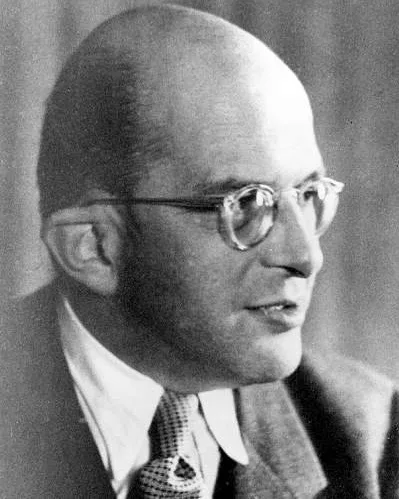
The plea was ignored. On 23 January 1945, at Plötzensee prison in Berlin, Erwin Planck was hanged.
Those close to him said afterwards that Max Planck's will to live had been destroyed. And perhaps this is the part that must be said without euphemism: he did not come through intact, did not defeat suffering, did not find a formula for bearing it. He broke. And still life went on demanding things of him.
🎬 In the video, this scene — an 86-year-old father writing to the dictator — gets imagery and score. Watch it at the exact moment: https://youtu.be/eSQ_1YEpLYw
The old man on the road
In the last months of the war, Planck and Marga were in Rogätz, near the Elbe. As the fighting advanced they had to flee. At 87, in severe arthritic pain and barely able to walk, he crossed woods, barns and improvised shelters, taken in by a farming family living in extremely simple conditions.
The Nobel laureate, the professor, the president, the man who created the quantum had become one more elderly person displaced by a war, dependent on the food and goodwill of strangers.
On 16 May 1945 the astronomer Gerard Kuiper — then attached to the Alsos mission — reached Rogätz in a military jeep with American soldiers and drove the couple to Göttingen.
The war was over. The house was gone. Erwin was dead. The scientific organisation he had led was compromised by its relationship with the regime. Planck could have vanished from public life, and no one would have called it cowardice.
Instead he took up, provisionally, the presidency of the Kaiser Wilhelm Society once more — the body that in 1948 would be refounded under his name. In 1946, frail and nearly 90, he was the only German scientist invited by the Royal Society to the Newton tercentenary celebrations in London. He kept working not as an invulnerable man, but as a wounded one who still believed he held a responsibility.
He died in Göttingen on 4 October 1947, aged 89.
What remained
Max Planck's name is hidden inside virtually all of modern physics. The constant h appears in the description of atoms, of light, of semiconductors — and of the screen you are reading this on. Since 2019 even the kilogram is defined from it. The Max Planck Society, created after the war, now runs some of the most important research institutes in the world.
But Planck's most human legacy is not a constant. It is the contradiction of his life. He believed in order and lived in chaos. He believed in institutions and watched institutions serve a dictatorship. He believed in reason and had to beg a man who could not be reasoned with. He created a revolution he did not want. And he spent his final years rebuilding a world he no longer entirely belonged to.
He wrote, in his autobiography, that a new scientific truth rarely triumphs by convincing its opponents: it advances as a new generation grows up familiar with it. The idea was popularised in a blunter form — science advances one funeral at a time. Planck's life shows something more uncomfortable: funerals stop being metaphors when they belong to your own family. And no discovery, prize or position protects anyone from the moment they must go home and find an empty chair.
Perhaps that is the answer to the opening question. How much can a man lose before he breaks? There is no fixed amount. And continuing does not mean he did not break.
Max Planck continued after breaking. Not because he was stronger than everyone else, nor because he understood suffering — but because, all his life, he had learned to do one thing when he did not know what to do: perform the next duty. Give the next lecture. Answer the next letter. Play the next note. And try to reach the next day.
▶️ Watch the full story
This article was born from the Max Planck episode on the Zigurat channel — documentaries that open the files of figures history turned into statues, looking for the human being trapped inside. The video tells this story with reconstructions, an original score and an atmosphere the text can't reach: https://youtu.be/eSQ_1YEpLYw
If this story held you, subscribe to the channel — and explore other episodes of the series on the blog.
Frequently asked questions
Who was Max Planck?
A German physicist (1858-1947) and the founder of quantum theory. On 14 December 1900 he proposed that energy is emitted in indivisible packets — quanta — introducing the constant h. He received the 1918 Nobel Prize in Physics and led the Kaiser Wilhelm Society, today the Max Planck Society.
How many children did Max Planck lose?
All four from his first marriage, to Marie Merck. Karl died in combat near Verdun (1916); Grete died in childbirth in 1917; Emma, her twin, died in childbirth in 1919; and Erwin was executed by the Nazi regime in January 1945. Marie herself had died in 1909.
Why was Erwin Planck executed?
For his involvement in the 20 July 1944 plot against Hitler. He was sentenced to death by the Volksgerichtshof and hanged at Plötzensee prison in Berlin on 23 January 1945 — despite the personal plea for clemency his father wrote to Hitler in October 1944.
What is the Planck constant?
The constant h relates the energy of a quantum of radiation to its frequency. It is one of the fundamental constants of nature, present throughout modern physics, and since 2019 it underpins the definition of the kilogram in the International System of Units.
Sources & references
- 01 Max Planck Society — "Max Planck's private life" and general biographical overview
- 02 The Nobel Prize — official biography of Max Planck, 1918 Nobel Laureate in Physics
- 03 German Resistance Memorial Center (GDW Berlin) — biography of Erwin Planck
- 04 Joint Quantum Institute — "Planck and the birth of quantum mechanics"
- 05 The Royal Society — obituary notice for Max Planck (1948)
- 06 Scientific American — Gerard Kuiper's rescue of Max Planck in May 1945

This article started as a video
Subscribe to the channel so you don't miss the next ones.