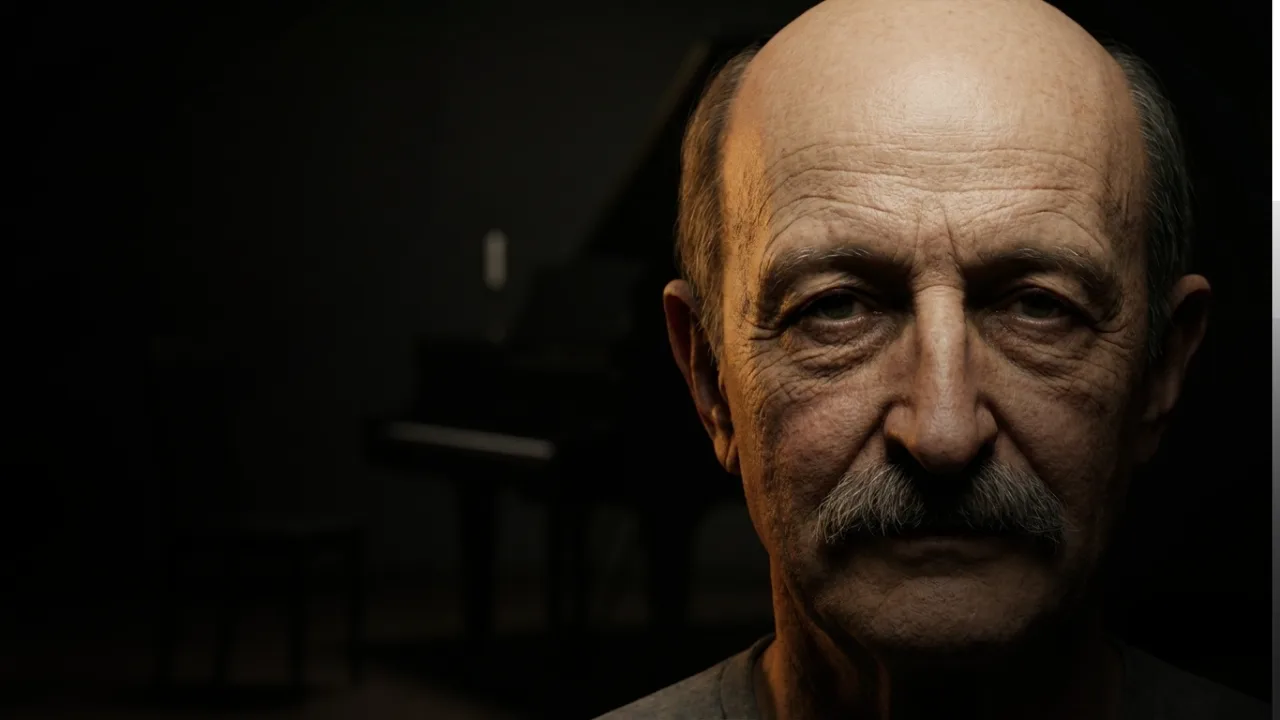
Ignaz Semmelweis: The Doctor Destroyed for Being Right
In 1840s Vienna there was a maternity ward women begged not to enter. And there was another, through the door beside it, where they wanted to be treated.
Same building. Same beds. Same city. In the first, staffed by doctors and medical students — the intellectual elite of the Austrian Empire — three times as many mothers died. In April 1847 mortality reached 18.3%: nearly one in five women who walked in left in a coffin. In the second, staffed by midwives, the figure sat between 2% and 4%.
The women of Vienna knew. Many, on being assigned to the doctors' clinic, chose the unthinkable: giving birth in the street, with no help at all, and only then walking to the hospital. The numbers were on their side — delivering on the pavement was safer than delivering in the hands of the empire's finest physicians.
Nobody knew why. Until a 28-year-old Hungarian decided to ask.
▶️ Prefer to watch? This story is a full video documentary, with original imagery and score, on the Zigurat channel: https://youtu.be/IMbF940iwUg
The outsider who would not accept the standard answer
Ignaz Semmelweis was born on 1 July 1818 in the Tabán district of Buda, the fifth of ten children of a prosperous merchant. A geographical footnote: Budapest did not yet exist. Buda, Óbuda and Pest were three independent cities separated by the Danube, and would not merge until 17 November 1873. Semmelweis's life would cross both banks.
He went to Vienna in 1837 to study law and traded the courts for medicine. He took his doctorate in 1844 and specialised in obstetrics. In 1846 he won the post that would change everything: assistant to Professor Johann Klein, head of the First Obstetrical Clinic at the Vienna General Hospital.
He was everything the Viennese elite disdained — a Hungarian in an Austrian empire, a merchant's son among aristocrats, far too blunt. But he had something the others lacked: he could not accept the standard answer. When the professors shrugged and blamed the climate, the miasmas, the city's bad air, he looked at the two doors side by side and asked the question nobody wanted to hear.
If it's the air, why does the air kill through one door and spare through the other?
He turned the puzzle into an obsession, eliminating hypotheses with the coldness of an interrogator. Overcrowding? The midwives' clinic was fuller. Climate? Identical on both sides of the wall. He tested birthing position, ventilation, diet, even fear. Nothing explained it.
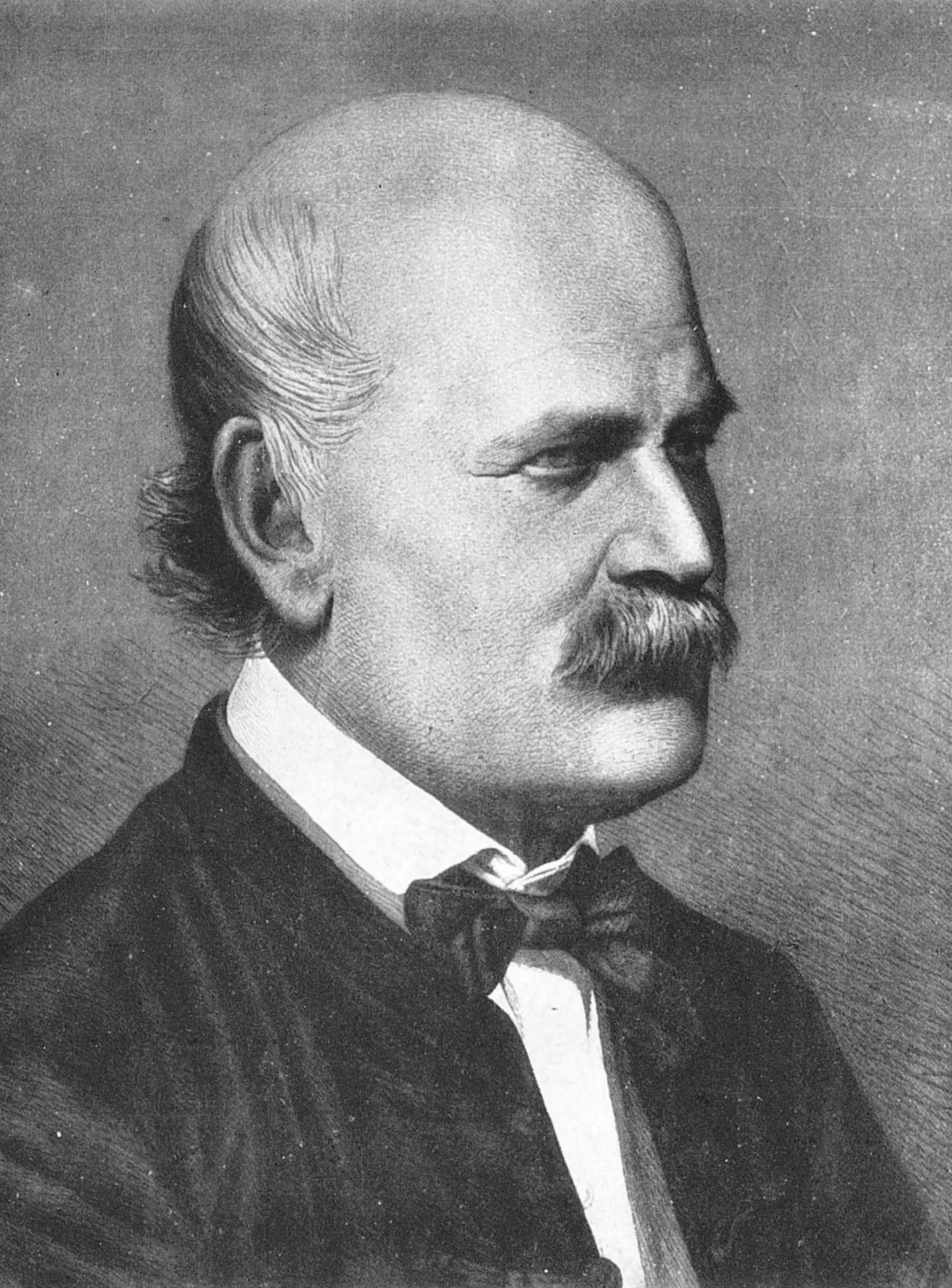
The scalpel that killed a friend
One detail gnawed at him. The doctors of the First Clinic began their day differently: before touching any woman in labour, they went down to the autopsy room. This was the height of anatomical medicine — every death dissected, studied, learned from. Students opened the bodies of the women who had died of fever the day before, then went upstairs to examine the living. The midwives of the Second Clinic never touched a corpse.
In March 1847, crushed by deaths he could not explain, Semmelweis left Vienna for Venice. When he returned, he learned his friend was dead.
Jakob Kolletschka, professor of forensic medicine, had been supervising a dissection when a student's scalpel slipped and cut his finger. A small cut. Days later, Kolletschka was dead.
Semmelweis read his friend's autopsy report and felt his hands go cold. Peritonitis. Pleuritis. Meningitis. Systemic infection. Organ by organ, line by line: it was the same picture as the mothers killed by puerperal fever. Identical.
Kolletschka had not given birth. He had not breathed miasma. He had been cut by a blade dirty with cadaver.
And then the conclusion assembled itself, cold and monstrous. Cadaveric particles — invisible, clinging to the hands that dissected the dead in the morning and examined the living in the afternoon. It was not the air killing the mothers of Vienna.
It was the doctors.
It is worth pausing on what that meant for Semmelweis himself. He was a doctor of the First Clinic. He went down to the basement. He dissected. He examined. How many of those women had died at his hands? Years later he would write that God alone knew how many had gone to their graves because of him.
One basin, and the month nobody died
The solution cost pennies: a basin, water, and chlorinated lime — a common disinfectant, chosen because it stripped the smell of cadaver from the skin. In May 1847, Semmelweis nailed his order to the door of the First Clinic. No doctor, no student would touch a patient without first washing in the solution.
This was not today's quick rinse. First soap, then a brush under the nails, then several minutes scrubbing in a caustic solution that burned, cracked and inflamed the skin. The doctors complained, and this time they had a concrete reason. The alternative, however, was still the death of their patients.
Then the numbers spoke. Before the order, 18.3%. After: twelve, five, three, two per cent. By 1848 mortality had fallen to around 1.27% — and there were months of zero. Not one mother. Not one.
A basin of chlorinated water had just brought the death clinic level with the midwives'. The proof was made: mathematical, public, irrefutable.
What he did not know was that, for the medicine of his time, being right was the worst crime he could commit.
One detail usually gets lost in the heroic version of this story: Semmelweis did not understand everything at once either. At first he believed the danger came only from cadavers. After months of improvement, a patient with a severe infection was examined during rounds; the same practitioners then touched other women, and a fresh run of deaths began. He corrected his own theory — infectious matter could also pass from one living patient to another — and ordered disinfection between every examination. He did not defend his first hypothesis out of pride. He changed the hypothesis to protect the women.
"I killed them"
Accepting Semmelweis's discovery required every doctor in Europe to look at his own hands and admit the inadmissible. Not fate. Not the climate. Not God. Me. With these hands.
The medical elite overwhelmingly preferred the more comfortable answer: that the Hungarian was wrong. A gentleman's hands, they said, do not carry disease. The theory contradicted centuries of miasma and the pride of thousands of physicians.
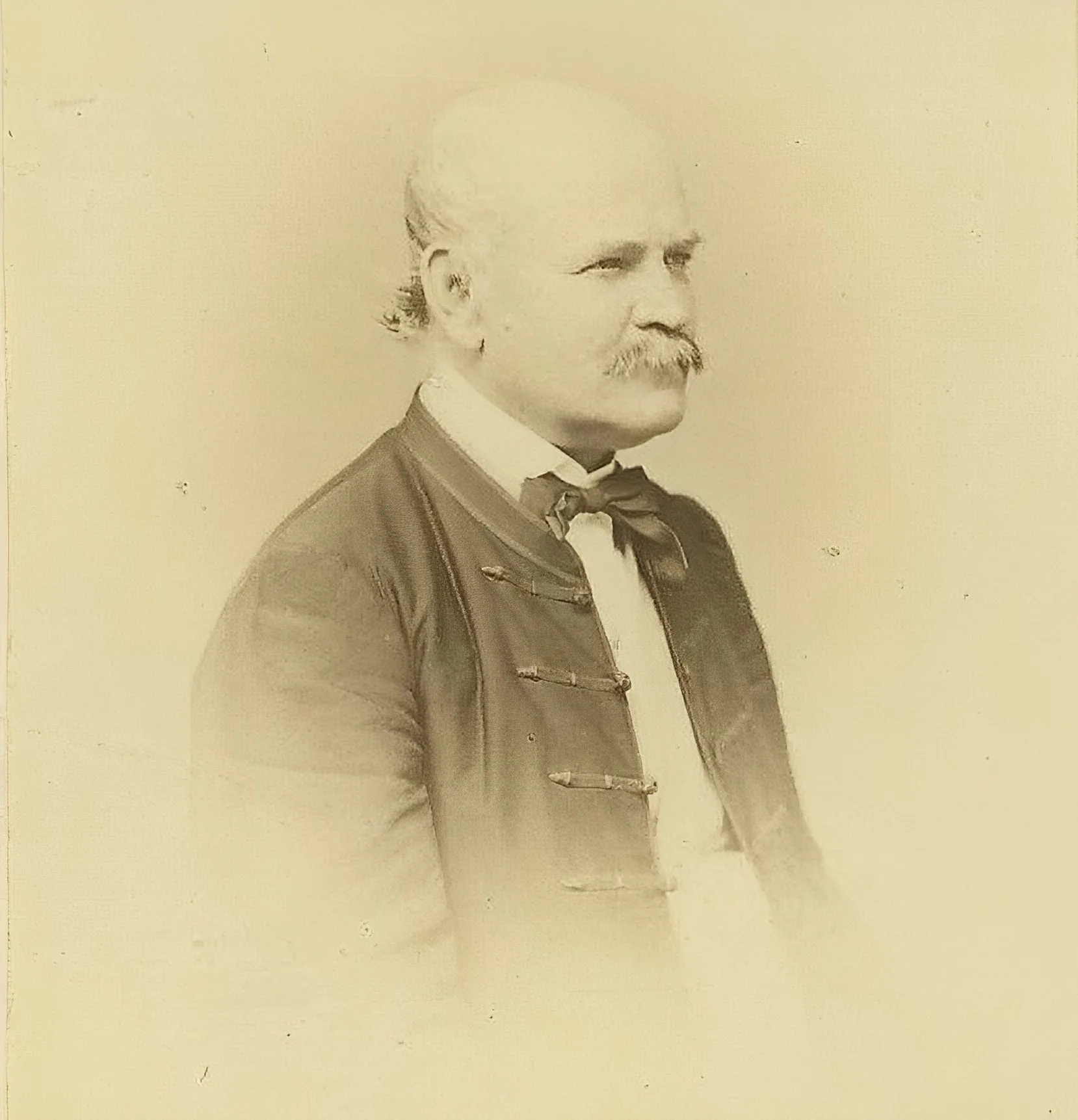
Klein, his own chief, became his most dedicated enemy. And when the revolutions of 1848 set the empire alight, he found the perfect pretext: the Hungarian assistant, sympathiser of the rebels. In 1849 Semmelweis's reappointment was refused. The clinic where he had driven death to zero threw him out.
Embittered, he left Vienna abruptly in 1850, without even warning the allies still trying to help him. The decision weakened his position and made it easier to treat his discovery as a personal quarrel already settled.
Pest: the proof redone, and two small coffins
In Hungary, Semmelweis did the only thing he knew how to do: he proved it all over again. At St. Rochus Hospital in Pest, between 1851 and 1857, maternal mortality fell to 0.85% — under one per cent, while the maternity wards of Europe's great capitals remained slaughterhouses. In 1855 he became professor of obstetrics at the University of Pest.
In 1857 he married Mária Weidenhofer, nineteen years his junior, the daughter of a Pest merchant. The following year their first child was born, Ignác, named for his father. He lived two days.
In 1859 a girl was born, Mária, named for her mother. She lived four months.
The sources do not reliably record what caused the two deaths, and it would be wrong to invent an explanation. What can be said is this: the man who had drastically cut maternal mortality inside hospitals found no formula capable of protecting his own children. Faced with personal loss, his numbers offered nothing.
Grief aged him all at once. In his early forties he already carried the body of an old man. Then came the ones who stayed: Margit, Béla and little Antónia.
The book, and the letters that should not have been written
There was one thing Semmelweis could not do: forget. Every report arriving from Vienna, Prague, Paris carried the same silent arithmetic — thousands of mothers dying every year of a disease he knew how to prevent with a basin of water. To him this was no longer a scientific debate. It was a massacre in progress, and those responsible were lecturing at Europe's best universities.
In 1861 he gathered everything — figures, tables, theory and fourteen years of proof — into Die Ätiologie, der Begriff und die Prophylaxis des Kindbettfiebers, a monumental book on the aetiology of puerperal fever. It was his final wager. Medical Europe answered with cold reviews, disdain and silence.
That was when his approach changed. In 1862, close to despair, he began publishing open letters against some of the continent's most influential obstetricians — Späth, Scanzoni, Siebold. He called them ignorant, and irresponsible murderers, accomplices to deaths that were still happening.
From where he stood, every day of resistance meant more patients buried. But the language that expressed his urgency also made it far easier to ignore the content and argue only about the man delivering it.
The pretext, the asylum, and the right hand
From about 1861, accounts describe an unrecognisable man: explosive, erratic, consumed. Historians still debate what was destroying him — early dementia, a neurological illness, or simply the weight of carrying alone, for nearly twenty years, a truth nobody would accept. We will probably never know.
What we do know is what was done to him.
In July 1865 those closest to him — colleagues and his own wife, convinced he had lost his reason — decided to have him committed. Nobody had the courage to tell him. They arranged a pretext: a trip to Vienna to visit a new medical institute. The man who had spent his life exposing other people's errors walked innocently into the last deception.
On 30 July 1865, Semmelweis arrived at the Döbling asylum believing he was visiting a medical establishment. When he realised and tried to leave, the records describe a struggle with the attendants, physical restraint and a straitjacket. Accounts state that he was also severely beaten and locked in a dark cell — the exact details are still disputed.
Soon afterwards, a wound on the middle finger of his right hand had turned gangrenous. It is not certain whether it appeared before the committal, during the restraint, or from some other cause. The infection spread through tissue and bone.
On 13 August 1865, fourteen days after entering the asylum, Ignaz Semmelweis died at 47 of systemic infection. Not necessarily the same disease as the mothers of Vienna — but the same kind of invisible enemy he had spent his life trying to keep out of the human body. And the wound was on his hand.
🎬 In the video, this scene — the asylum door closing — gets imagery and score. Watch it at the exact moment: https://youtu.be/IMbF940iwUg
Very few people attended the funeral. At the Pest clinic, his successor abandoned handwashing and mortality multiplied again — with virtually no protest from the profession.
The surname the family stopped using
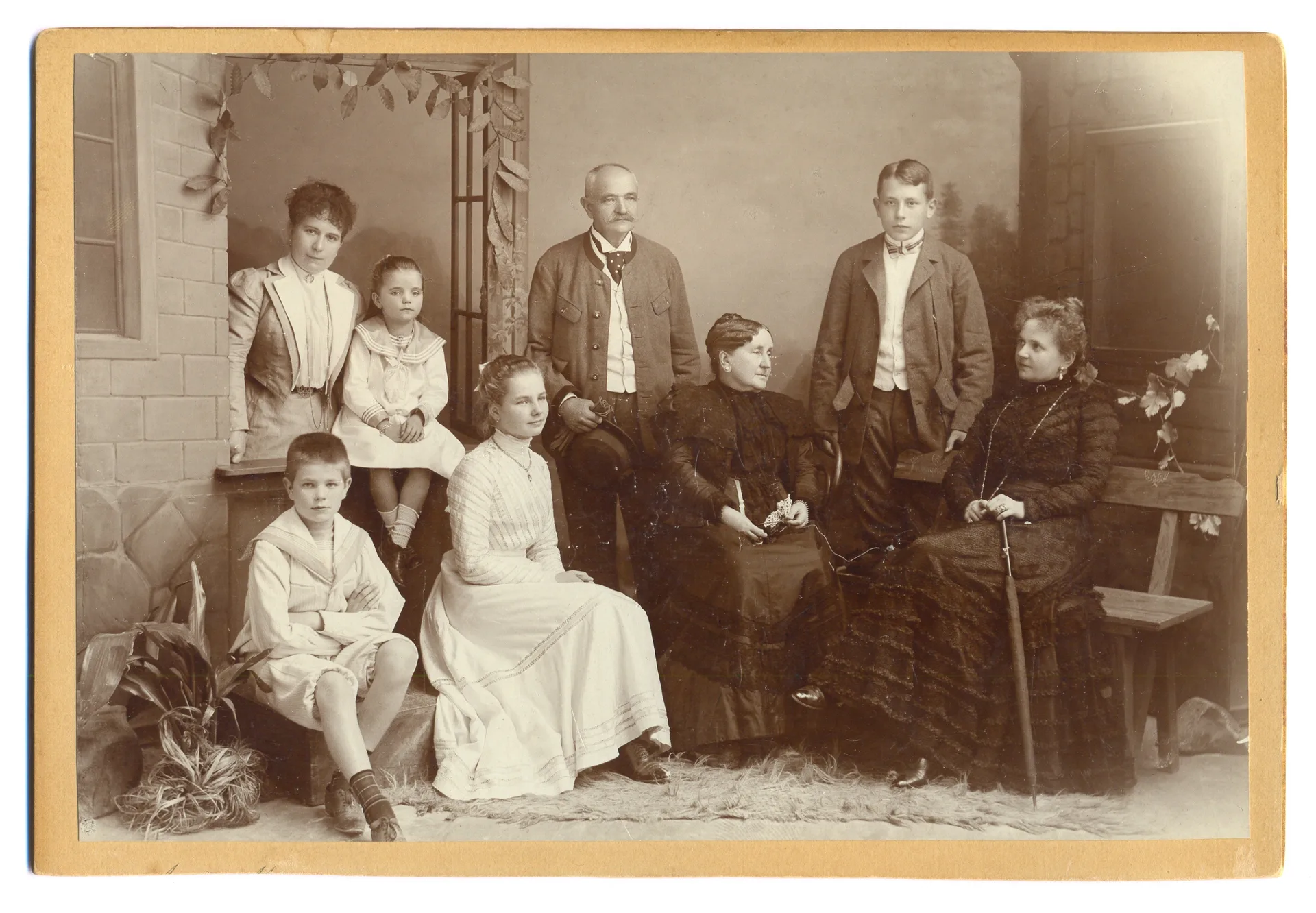
Fourteen years later, on 19 November 1879, the widow Mária petitioned, on her own behalf and that of her three minor children, to change the surname Semmelweis to Szemerényi — a Hungarian form that Ignaz's own brothers had adopted back in the 1840s, at a time when many families of German origin were Magyarising their names.
The stigma of the committal and the death may have weighed on the decision. The documents do not let us turn that possibility into certainty. We know only that in 1906, asked why the name had been changed, Mária replied that the question disturbed her deeply.
Time's revenge
In the decades that followed, germ theory supplied the mechanism Semmelweis had not been able to see. Pasteur demonstrated the role of microorganisms. Lister carried antisepsis into surgery in 1867. Koch closed the argument.
They did not prove Semmelweis right about every detail. They proved something more important: his central conclusion was correct. Infectious matter could be carried by health workers, and preventing that transmission saved lives.
And Mária lived to see the turn. She lived to see Budapest raise a monument, in 1906, to the doctor who had died discredited. She lived to see the world return its respect to the surname her family had stopped using. She died in 1910, at 73, having witnessed the unthinkable: the man committed as a lunatic becoming one of the great symbols in the history of medicine.
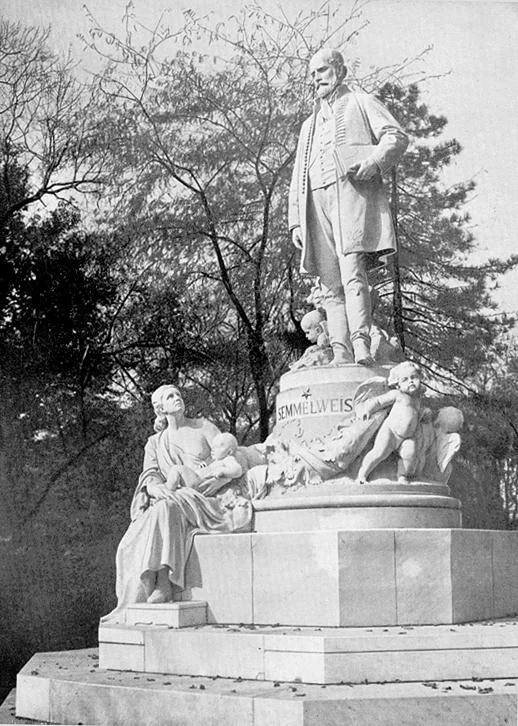
Today Budapest's medical university carries his name. And one phrase preserves the warning his story left behind: the Semmelweis reflex — the tendency to reject new evidence automatically, simply because it humiliates what we already believed.
Every time a health worker stops at a sink before touching a patient, they repeat the principle he fought for. Not because Semmelweis was the first human being to wash his hands, but because he demonstrated, inside a hospital and with numbers, the truth medicine needed to learn: sometimes the hands that try to heal are the same ones that carry death.
▶️ Watch the full story
This article was born from the Ignaz Semmelweis episode on the Zigurat channel — documentaries that open the files of figures history turned into statues, looking for the human being trapped inside. The video tells this story with reconstructions, an original score and an atmosphere the text can't reach: https://youtu.be/IMbF940iwUg
If this story held you, subscribe to the channel — and explore other episodes of the series on the blog.
Frequently asked questions
Who was Ignaz Semmelweis?
A Hungarian physician (1818-1865) and pioneer of antisepsis. In 1847, at the Vienna General Hospital, he discovered that puerperal fever was carried to women in labour on the hands of doctors coming from autopsies, and imposed mandatory washing with chlorinated lime. Mortality fell from 18.3% to around 1%.
What was puerperal fever?
A systemic infection that struck women shortly after childbirth. It began with chills, progressed to high fever and sepsis, and killed within days. Before antisepsis it was the leading cause of maternal death in European maternity wards.
Why did doctors reject Semmelweis's discovery?
Because accepting it meant admitting they had themselves caused the deaths. The dominant theory was miasma, and the idea that "a gentleman's hands" transmitted disease was considered offensive. Germ theory, which would come with Pasteur and Lister, did not yet exist.
What is the "Semmelweis reflex"?
The phrase describes the tendency to reject new evidence automatically because it contradicts established belief — even when the data supports it. It is named for the very case in which that reflex cost decades of lives.
Sources & references
- 01 Britannica — biography of Ignaz Semmelweis
- 02 Science History Institute — biographical profile of Ignaz Semmelweis
- 03 The Embryo Project Encyclopedia (Arizona State University) — Ignaz Philipp Semmelweis (1818-1865)
- 04 Ignaz Semmelweis, *Die Ätiologie, der Begriff und die Prophylaxis des Kindbettfiebers* (1861)
- 05 National Library of Medicine (PMC) — studies on the mortality decline following handwashing
- 06 Hungarian study on the Magyarisation of the surname Semmelweis → Szemerényi (mek.oszk.hu)

This article started as a video
Subscribe to the channel so you don't miss the next ones.