Henrietta Lacks: The Woman Science Used and Never Named
If you were vaccinated against polio, if you know anyone treated with modern chemotherapy, if you have heard of the HPV vaccine, you have been touched by the involuntary work of a woman who died in 1951, aged 31, in a charity ward in Baltimore.
Her cells are still alive. They are dividing right now in laboratories on every continent — by most estimates far more numerous than all the cells that ever made up her own body. They have been to space, into nuclear reactors, helped decode HIV and earned Nobel Prizes.
She was buried in an unmarked grave. For more than twenty years, the press and the scientific community itself repeated that the donor of those miraculous cells was a woman called "Helen Lane." They did not even get her name right.
Her name was Henrietta Lacks.
▶️ Prefer to watch? This story is a full video documentary, with original imagery and score, on the Zigurat channel: https://youtu.be/_uNUkYrO-Gk
Loretta Pleasant, of Roanoke
She was born Loretta Pleasant on 1 August 1920 in Roanoke, Virginia, daughter of Johnny Pleasant and Eliza Lacks Pleasant. She would grow up under the weight of rural poverty in the American South, in a country governed by Jim Crow segregation laws. As a child she acquired the nickname that would become permanent: Henrietta.
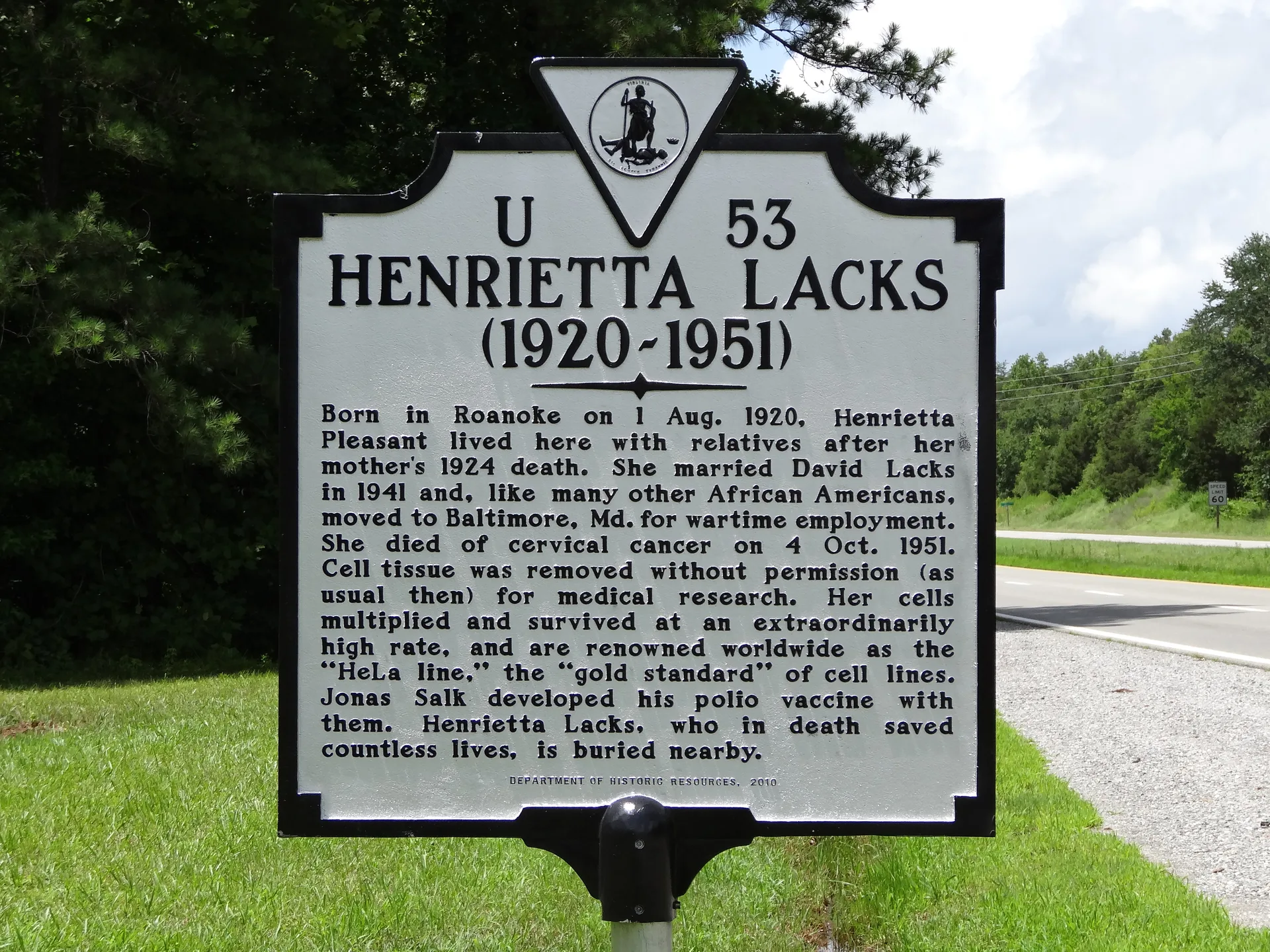
Around 1924, when she was four, her mother died giving birth to her tenth child. Unable to raise so large a family alone, Johnny took the children back to Clover and distributed them among relatives. Henrietta went to her grandfather Tommy Lacks — to an old log cabin that had once housed enslaved people on the family's farm.
There, in the "home-house" at Lackstown, she grew up picking tobacco alongside dozens of cousins, waking before dawn for work in the fields. School, when there was time for it, was poor and segregated. Henrietta would leave her studies in the sixth grade.
Among the cousins in that house was David "Day" Lacks, five years her senior, with whom she would share the rest of her life. Lawrence was born in 1935, when she was fourteen. Elsie was born in 1939 — a girl with epilepsy and developmental delay, who years later would be committed to a segregated state institution.
Remember her name. This story has more than one victim.
Baltimore
On 10 April 1941, Henrietta and Day formalised the union life had already imposed on them. Around the same time a cousin, Fred Garret, brought news from Baltimore: Bethlehem Steel, expanding fast to serve the wartime industry, was hiring at its Sparrows Point mill.
Day went first. Henrietta followed with the children, becoming part of the Great Migration — the movement that carried millions of Black families from the rural South to the industrial North. They settled in Turner Station, a working-class, largely Black neighbourhood outside Baltimore.
The family grew: after Lawrence and Elsie came David Junior, Deborah and finally Joseph, born on 19 September 1950. While pregnant with that fifth child, Henrietta already felt something strange — a "knot" in her womb, as she would describe it to her cousins. The doctors who examined her at the birth and, weeks later, at a routine appointment, found nothing.
29 January 1951
In early January, Henrietta began bleeding outside her menstrual period. She kept the discomfort largely to herself, as was her habit. On 29 January she went to the Johns Hopkins Hospital — the only major medical centre in the region with a charity ward that treated Black patients.
She was examined by the gynaecologist Howard Jones, who found something he had never seen: a lesion of an unusual, brilliant purple on her cervix. The biopsy went for analysis and, days later, Jones telephoned with the result — malignant epidermoid carcinoma of the cervix.
Henrietta told almost no one. She returned to the hospital alone, told her family it was "just a treatment," and signed the admission form authorising the doctors to perform any operative procedure they judged necessary. A generic authorisation, common at the time, that said nothing about scientific research or the collection of tissue.
On 8 February 1951, during the placement of the radium tubes for her first radiotherapy session, the surgeon Lawrence Wharton Jr. removed two small tissue samples — one from the tumour, one from the healthy area around it. Without her knowledge. Without her consent.
This was not an isolated act of bad faith. It was routine: patients in the charity wards of teaching hospitals frequently had their tissue used in research without ever being told. That is precisely the point — what happened to Henrietta Lacks was normal, and normal was this.
The samples went that same morning to the laboratory of Dr George Otto Gey, down the same corridor.
The impossible, in a tube of chicken plasma
For years Gey and his assistant, Mary Kubicek, had been trying to culture a line of human cells capable of surviving indefinitely outside the body. Every previous sample had withered and died within days.
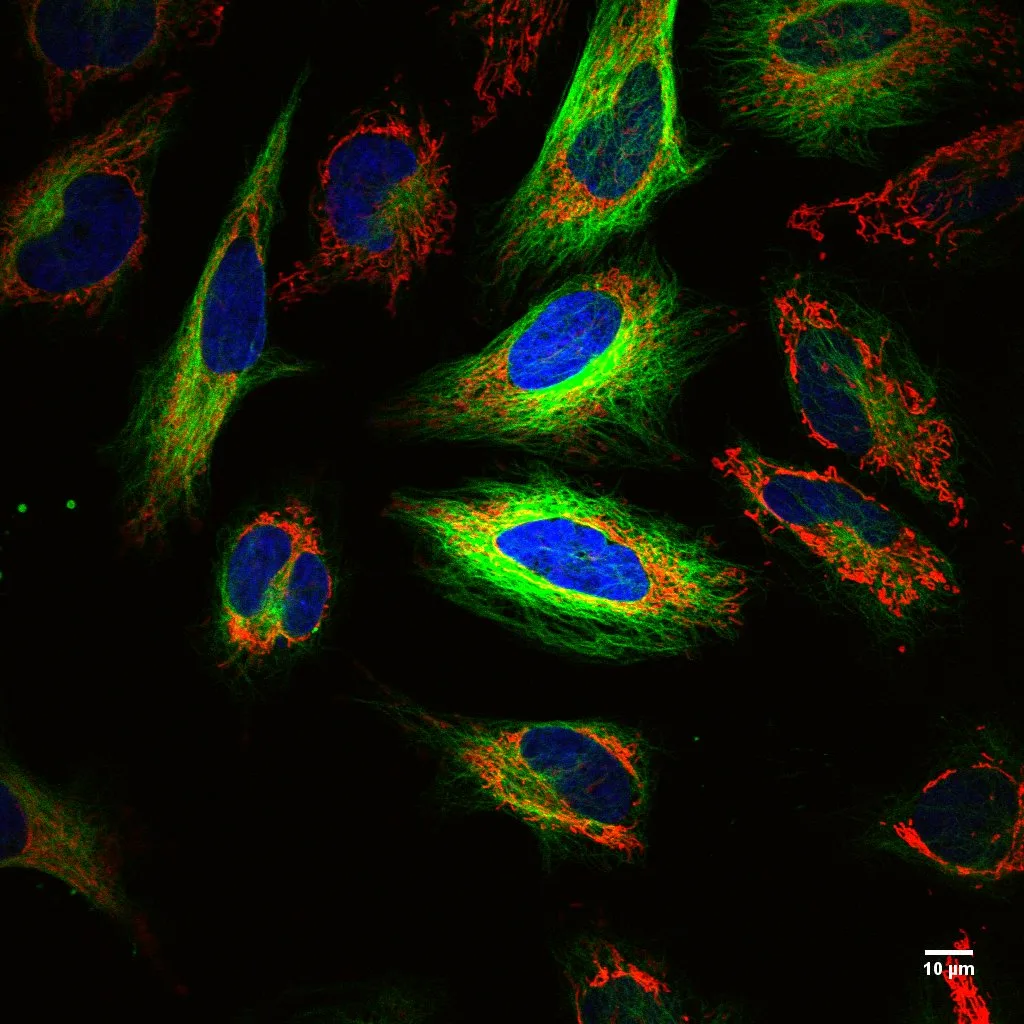
Henrietta's cells, grown in tubes with chicken plasma and blood serum, did what no others had: they doubled in number every twenty-four hours, a headlong multiplication never observed before. They named the line "HeLa," from the first two letters of the patient's first and last names — a laboratory convention intended, ironically, to protect the anonymity of its origin.
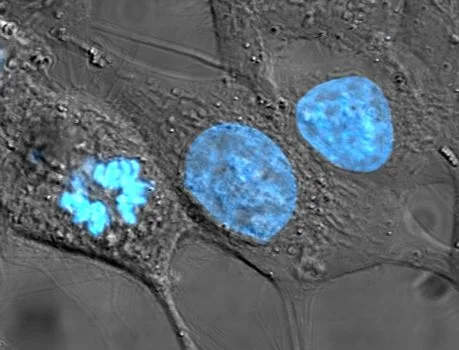
And here lies the secret it would take science decades to decipher. Henrietta's cells were not immortal by accident.
The tumour that was killing her had been caused by a virus — human papillomavirus, HPV — which, combined with a rare cellular alteration, had reactivated an enzyme called telomerase: the mechanism that stops a cell from ageing. Every cell in that tumour had lost the ability to die.
The same disease consuming her body was making her cells eternal.
4 October 1951
While the cells multiplied in test tubes, Henrietta's body deteriorated fast. The radiotherapy caused severe burns, and the cancer spread with an aggressiveness that puzzled her own doctors. On 8 August 1951 she was admitted to Johns Hopkins again, this time not to leave.
Henrietta Lacks died on 4 October 1951, aged 31. The autopsy revealed metastases in practically every organ.
She was buried in an unmarked grave in the family cemetery at Lackstown, near Clover — the same patch of ground where she had grown up picking tobacco. For almost sixty years no headstone marked the spot. A proper grave was only raised in 2010, after her story became known to the world.
Elsie
And the family had not finished losing.
Four years later, in 1955, Elsie — the second daughter, institutionalised since childhood at segregated Crownsville — died alone, aged fifteen. Decades later, when the family finally gained access to the records, they discovered that the institution carried out experimental procedures on patients, without consent.
The girl her mother had visited every week, for as long as she had life to do it, had no one to visit her at the end.
The story of Henrietta's cells tends to forget that she also left this other story behind.
🎬 In the video, this part — what the family found out about Crownsville — gets imagery and score. Watch it at the exact moment: https://youtu.be/_uNUkYrO-Gk
The world that owed her everything and called her Helen Lane
Gey never patented the HeLa cells. On the contrary, he distributed them free to laboratories worldwide, in small tubes sent by post. It was the first human cell line immortalised in culture, and its availability at scale changed the course of medicine.
As early as 1952 and 1953, HeLa were mass-produced to test Jonas Salk's polio vaccine — the first great triumph of their scientific usefulness. And the factory producing them by the billion sat at the Tuskegee Institute in Alabama: the same institution whose name would forever be tied to the infamous syphilis study on Black men, left untreated and uninformed. At one address, both faces of American medicine — a Black woman's cells saving the world, and Black bodies used without consent.
In the decades that followed, HeLa would help found modern cytogenetics, study the effects of radiation and weightlessness, understand viruses such as HIV and human papillomavirus, and develop in-vitro fertilisation techniques.
There was one final irony, of the kind only science writes. In 1984 the German virologist Harald zur Hausen found, in HeLa cells themselves, the genetic material of HPV-18 — the proof linking the virus to cervical cancer. The discovery would win him the Nobel Prize and open the way to the HPV vaccine.
The disease that killed Henrietta Lacks is preventable today. In part, thanks to Henrietta's own cells.
Meanwhile, the world that owed her everything did not know her name. For more than twenty years, the press and the scientific community repeated that the donor was a woman called "Helen Lane." Wrong name, erased history.
In 1966 came the scandal scientists would call "the HeLa bomb": the geneticist Stanley Gartler proved that Henrietta's cells, too robust by far, had invaded and contaminated dozens of other cell lines in laboratories around the world. Years of research had been done, unknowingly, on her cells. Immortal to a fault.
The family, meanwhile, knew nothing of what had become of those cells. Only in 1973, when researchers approached her children for blood samples — officially to map the family's genetics and identify the contamination, in practice without ever truly explaining why — did the Lackses begin to suspect something larger.
The debt
The public revelation came in 1976, with Michael Rogers's article in Rolling Stone, and gained ground in 1997 with a BBC documentary. But it was in 2010, with The Immortal Life of Henrietta Lacks by science journalist Rebecca Skloot, that the story reached the world.
The book exposed not only the scientific contribution of those cells but the silence, the absence of consent, and the lack of any compensation to a family that, decades on, still struggled to afford health insurance — while their mother's cells sat in countless laboratories and treatments around the planet.
One nuance is worth recording: Johns Hopkins states it never sold or profited from HeLa, which Gey gave away. The profit came later, from the biotechnology industry that grew on top of them.
In 2013 the complete HeLa genome was published without the family's authorisation, reigniting the debate over genetic privacy. The case led the US National Institutes of Health to strike an unprecedented agreement giving her descendants a formal role in reviewing requests for access to that data. In 2017 HBO brought the story to screen in a film starring Oprah Winfrey.
And then came the chapters that finally began to pay the debt.
In October 2021 the World Health Organization awarded Henrietta a posthumous prize, received in Geneva by Lawrence, her eldest son, then 87 — the boy from Lackstown standing before the world in his mother's name.
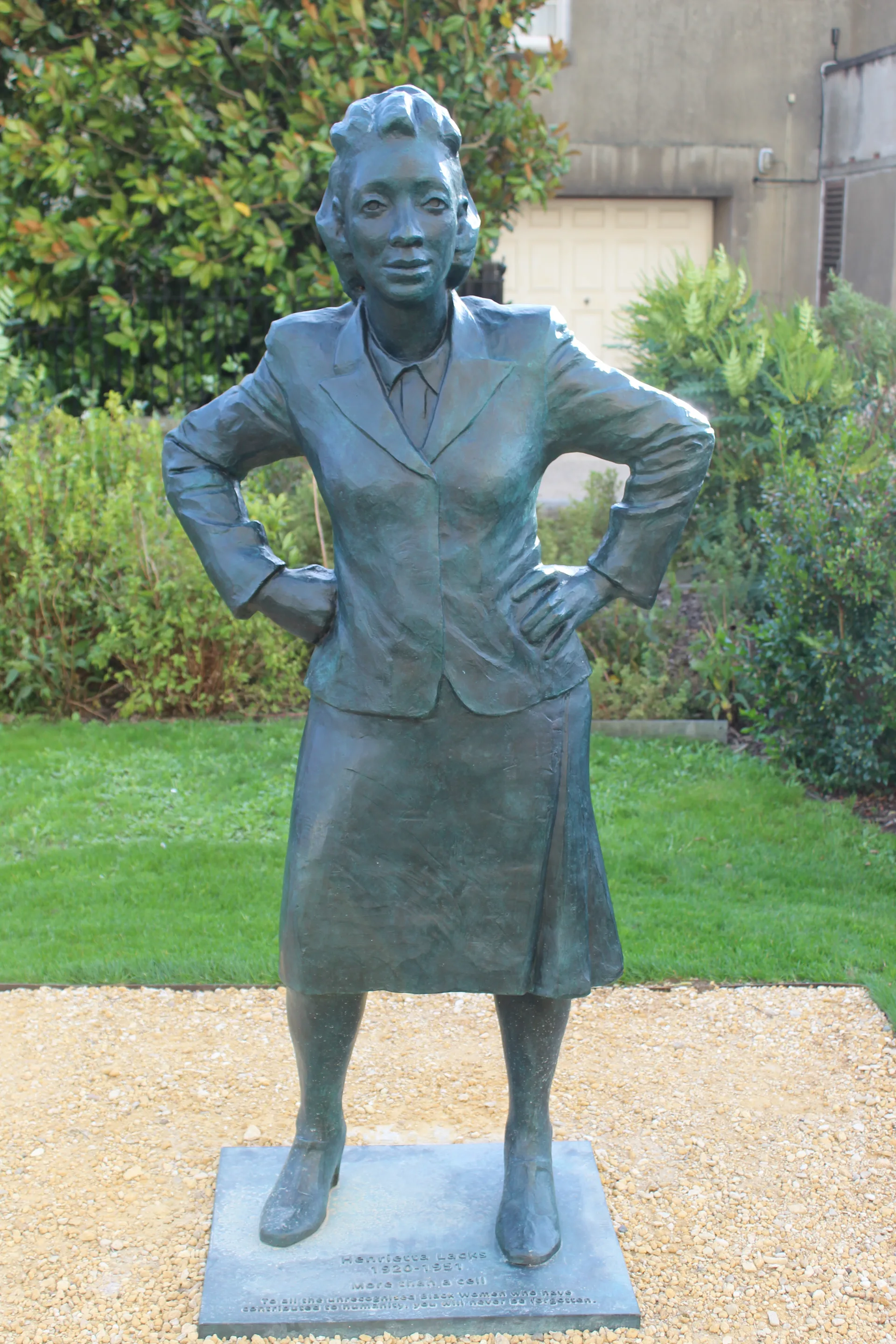
That same month, on 4 October — seventy years to the day after her death — a bronze statue by the artist Helen Wilson-Roe was unveiled in the gardens of the University of Bristol, England. It is regarded as the first public statue of a Black woman created by a Black artist in the United Kingdom. Its inscription is dedicated to all the unrecognised Black women who have contributed to humanity.
And on 1 August 2023 — the day Henrietta would have turned 103 — the family settled with the biotechnology giant Thermo Fisher Scientific, closing their suit over profit without consent. The terms are confidential. But for the first time in seventy years, the last word belonged to the Lacks family.
What remains
Seventy years after her death, the cells of a young Black mother, a tobacco picker from rural Virginia, go on dividing in laboratories on every continent. Vaccines, cancer treatments, advances in genetics and space biology: almost everyone alive today has been touched, in some way, by the silent and involuntary legacy of Henrietta Lacks.
What her story left behind is not a scientific curiosity. It is a question medicine took seventy years to begin answering: whose body is it, once it enters a hospital?
Henrietta Lacks never knew her cells would live forever. Nobody asked her.
▶️ Watch the full story
This article was born from the Henrietta Lacks episode on the Zigurat channel — documentaries that open the files of lives history preferred to tell only halfway. The video tells this story with reconstructions, an original score and an atmosphere the text can't reach: https://youtu.be/_uNUkYrO-Gk
If this story held you, subscribe to the channel — and explore other episodes of the series on the blog.
Frequently asked questions
Who was Henrietta Lacks?
A Black American woman (1920-1951), mother of five, who died at 31 of cervical cancer at the Johns Hopkins Hospital. During her treatment, samples of her tumour were taken without her knowledge and gave rise to HeLa, the first human cell line able to multiply indefinitely in the laboratory.
What are HeLa cells?
The first human cell line immortalised in culture, taken from Henrietta Lacks's tumour in 1951. Unlike ordinary cells, they divide indefinitely, which made them the most widely used research tool in biology — from the polio vaccine to the study of HIV and HPV.
Why were Henrietta Lacks's cells immortal?
The tumour was caused by HPV which, combined with a rare cellular alteration, reactivated telomerase — the enzyme that stops a cell from ageing. The cells lost the ability to die. It was in HeLa cells themselves that Harald zur Hausen identified HPV-18, the discovery that won him the Nobel Prize and opened the way to the vaccine.
Did the Lacks family ever receive compensation?
For decades, none. Johns Hopkins states it never sold or profited from the cells. In 2013 the family gained a formal voice over access to HeLa genomic data, and on 1 August 2023 they reached a confidential settlement with Thermo Fisher Scientific — the first concrete outcome of their fight for compensation.
Sources & references
- 01 Rebecca Skloot, *The Immortal Life of Henrietta Lacks* (2010)
- 02 Johns Hopkins Medicine — The Legacy of Henrietta Lacks
- 03 World Health Organization — posthumous award to Henrietta Lacks (October 2021)
- 04 University of Bristol — unveiling of the Helen Wilson-Roe statue (4 October 2021)
- 05 Michael Rogers, *Rolling Stone* (1976) — the first report on the Lacks family
- 06 Press coverage of the Lacks family settlement with Thermo Fisher Scientific (August 2023)

This article started as a video
Subscribe to the channel so you don't miss the next ones.