Tommaso Campanella: He Faked Madness and Beat the Stake
Deep inside a castle in Naples there was a cell daylight never reached. It was in there that a Calabrian friar wrote the description of a perfect city — circular, sun-drenched, where nobody went hungry and all human knowledge was painted on the walls so that even poor children learned simply by walking through it.
He wrote it while serving a life sentence. He had just escaped the stake by convincing the most experienced inquisitors in Europe that he was insane — and he had held that lie, without once stepping out of character, through thirty-six hours of torture.
This is the story of Tommaso Campanella, and it answers an uncomfortable question: how long does an idea survive without sunlight?
▶️ Prefer to watch? This story is a full video documentary, with original imagery and score, on the Zigurat channel: https://youtu.be/T9ca1TS6CTs
The boy at the window
He was born on 5 September 1568 in Stilo, Calabria — then under Spanish rule — the son of a poor craftsman who could not read his own name. At baptism he was given the name Giovan Domenico.
In that south, no boy without money set foot in a classroom. The story goes that he solved this the only way available: he stood outside, beneath the window, listening to the lesson he could not pay for. And he learned faster than the boys sitting inside.
The scene is biographical tradition rather than documented fact — but it has survived four centuries because it explains everything that followed. The world denied him the door, so he turned the window into one.
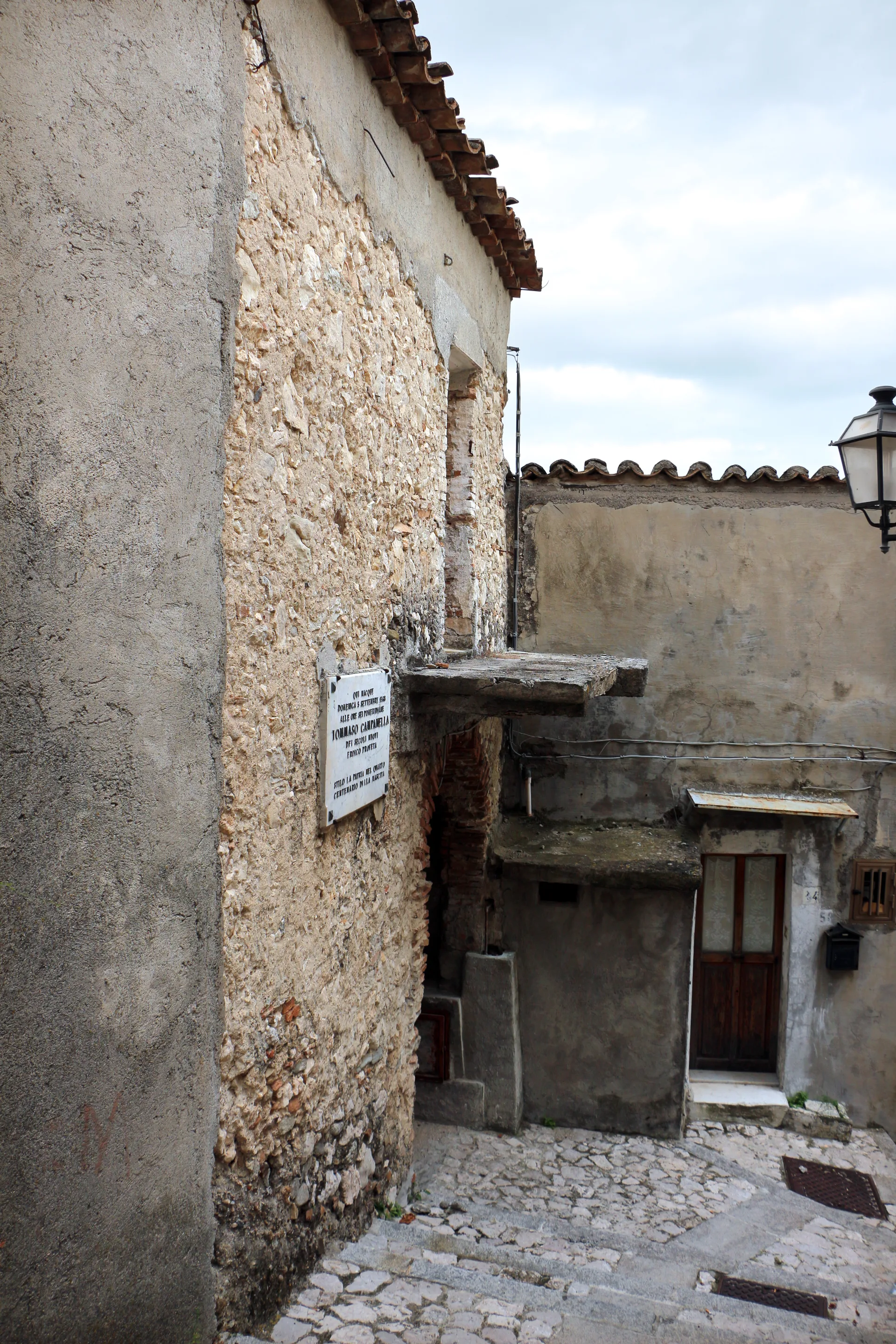
At fourteen he found the only path open to a brilliant poor boy: the monastery. He took the Dominican habit and chose a new name — Tommaso, after Thomas Aquinas, the order's greatest philosopher.
The boy who had learned through a window now had entire libraries at his disposal. That was exactly when the danger began.
The dangerous mind
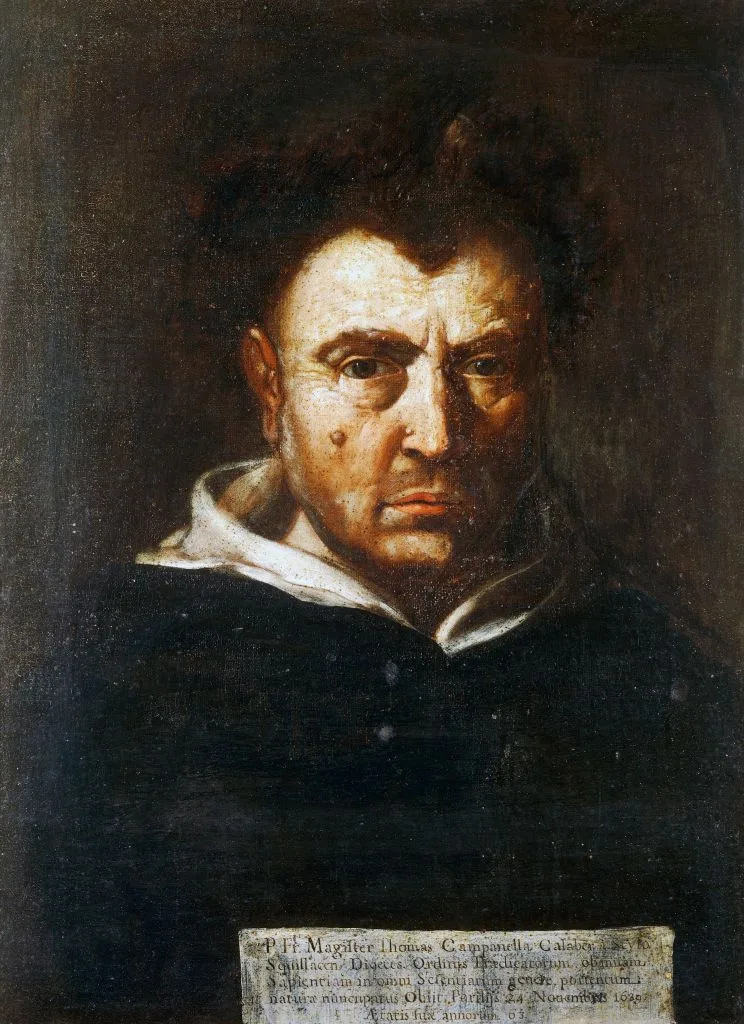
Campanella did not read like the other friars. He disagreed.
He embraced the ideas of Bernardino Telesio, who insisted that nature be studied through the senses and direct observation — not through the books of Aristotle, which the Church of his day treated almost as law. Barely into his twenties, he was already writing works that made his superiors break into a cold sweat.
In 1594 the Inquisition arrested him. Trial for heresy, forced abjuration, confinement — and one final order on his release in 1598: go back to Calabria and keep quiet.
He went back. Quiet, he did not.
The conspiracy
In a Calabria crushed by Spanish taxation, the friar began preaching that the year 1600 would bring great upheaval, that the stars announced the end of an age.
In 1599 the preaching became a plot. A conspiracy to overthrow Spanish rule and found, right there, a new republic governed by a mixture of reason and faith, without the misery he had known since boyhood — a real-world rehearsal of the city he would one day describe on paper. Historians still debate whether he was the active leader or the prophet who inspired the others.
In August 1599, two conspirators denounced him to the Spanish viceroy. Troops swept the region. Campanella was captured and taken to Naples in the hold of a ship.
The choice before the fire
The charge was double: rebellion against the crown and heresy against the Church. And since he had already been convicted once, he was now a relapsed heretic — a category with an all but certain outcome.
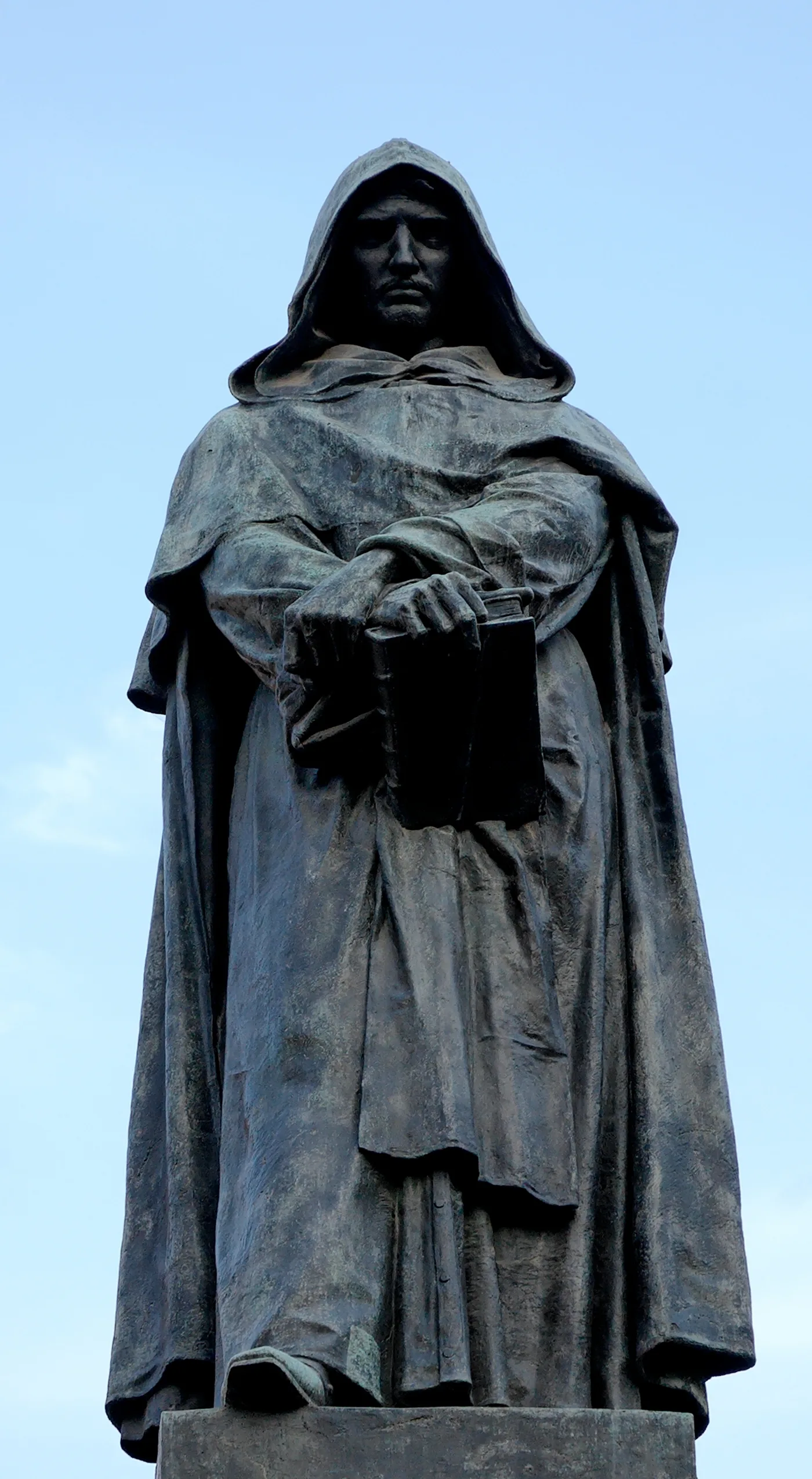
While he rotted in the cells of Naples awaiting trial, news arrived from Rome. On 17 February 1600, in the Campo de' Fiori, the Inquisition had burned another rebel mind alive: Giordano Bruno. Bruno had refused to pretend. He stood by every word before his judges and burned for all of them.
Two men, the same charges, the same tribunal, the same fire waiting. Bruno chose the truth and died for it. Campanella looked at that fire from four hundred kilometres away and chose the opposite.
If truth led to the stake, he would lie as no one had ever lied.
The madness gambit
There was a gap in canon law, and Campanella knew it: a madman cannot repent — therefore a madman could not be executed for heresy.
So the most lucid man in Naples began, deliberately, to go mad. Methodically. He raved during interrogations. He talked to the walls. He went as far as setting fire to his own cell.
The inquisitors were suspicious from the start. An actor, they said. A dissembler trying to dodge the flames. And the manuals prescribed a way of finding out the truth, resting on a premise nobody questioned: no sane man sustains a lie under torture.
The veglia
On 4 June 1601 the final test began: the veglia, the vigil. The prisoner suspended, kept from sleeping, held in a position of torment.
The manuals said nobody lasted more than a few hours without breaking. Five passed. Ten. Twenty. Thirty.
Thirty-six hours later, the friar from Calabria had not stepped out of character for a single second. He raved, he groaned, he spoke nonsense — and confessed to nothing.
When they brought him down, the inquisitors signed the verdict he had bought with his own body: insane, not answerable. In 1602 came the sentence — life imprisonment, not death.
He beat the Inquisition on the only board where it could be beaten: inside his own head.
The City of the Sun
In the same year as the sentence, at the bottom of a cell that in some periods was a damp pit daylight simply did not reach, he asked for paper.
And he wrote about a city.
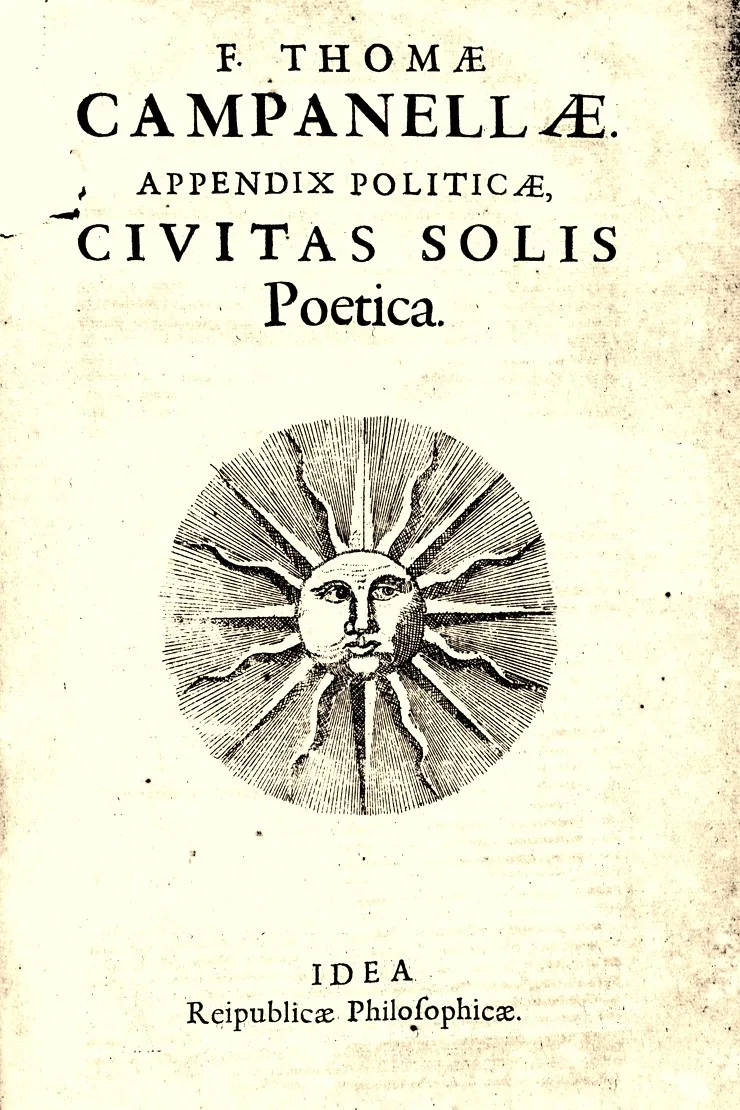
A circular city built on a hill, with seven walls named after the seven planets and a temple to the sun at its centre. A place where all knowledge was painted on the walls, so that any child would learn just by walking through it. Where there was no private property and no hunger. Where there were no boys listening to lessons from outside a window.
He called it The City of the Sun. He wrote it in 1602; the world would not read it until 1623.
It was not escapism. It was an answer. They could lock up the man — the city fit in no cell.
The prisoner who defended Galileo
The years passed and the prisoner became a legend. Scholars from across Europe made the pilgrimage to Naples to talk with the madman who wrote masterpieces.
In 1616, when the Church opened an investigation into a Florentine astronomer named Galileo Galilei, one of the least likely scenes in the history of science took place: from inside an Inquisition prison, Campanella wrote a defence of Galileo.
The Apologia pro Galileo — published in 1622 — argued, with impeccable theology, that investigating nature could not be a crime. A man convicted of heresy defending everyone else's right to look at the sky, from a place where the sky could not be seen.
Twenty-seven years
In all it came to twenty-seven years of imprisonment across the castles of Naples — Castel Nuovo, Castel Sant'Elmo, Castel dell'Ovo. Some of those years, in the pits of Sant'Elmo, without light.
In there he wrote philosophy, theology, poetry, astrology and politics: an entire library born behind bars, copied in secret, smuggled out by visitors and published on the far side of the Alps.
The Spanish empire had his body. It never had his ideas, not for a single day.
In 1626 the door opened — and closed again, with a fresh detention in Rome by the Holy Office. Full freedom came only in 1629. And it came because the world outside had a very specific interest in the old friar's talents.
The Pope and the eclipses
Urban VIII had a problem no army could solve: his enemies' astrologers were spreading word that the eclipses of 1628 and 1630 foretold the pontiff's death. All Rome believed it.
So the Pope summoned the greatest living authority on astrology — the man who had survived the Inquisition by feigning madness.
On the nights of the eclipses, in a sealed chamber of the palace, the two conducted protective rituals: white cloths on the walls, herbs burning, soft music, candles and torches lit to stand for planets and stars. An artificial sky built to replace the one that threatened.
Urban VIII survived both eclipses. But Campanella described the rituals in De siderali fato vitando, and when that became public the scandal nearly swallowed them both. Rome began to feel small.
The last escape
In 1634 a new conspiracy broke out in Calabria, led by a former disciple of his. Guilty or not, the Campanella name was in it, and Spain wanted his head.
At sixty-six, with help from the French ambassador and from the Pope himself, the old friar fled one last time — in disguise, tradition says, as in his youth — across the borders towards Paris.
And there the unthinkable happened. Louis XIII received him with honours. Richelieu gave him protection and a royal pension. The salons of Paris competed for the attention of the philosopher who had survived everything.
The boy who listened to lessons through a window ended his life as guest of honour at the most powerful court in Europe.
The horoscope of the Sun King
In 1638 the heir to the French throne was born, and the court asked the old astrologer for the boy's horoscope. Campanella pored over the charts and wrote a prophecy: this newborn would have a long, glorious — solar — reign.
The boy would become Louis XIV. The Sun King.
The man who had written The City of the Sun locked in a dungeon greeted, in his cradle, the king who would make the sun his own crown.
It was his last great act. The story goes that the following spring he spent his final days performing rituals against an approaching eclipse — that of 1 June 1639 — which he feared would be fatal to him. He died on 21 May, at the Dominican convent on the rue Saint-Honoré in Paris, days before the shadow arrived.
What remains
The Spain that imprisoned him no longer exists. The cells of Naples are a tourist attraction. The inquisitors who tortured him are in no book by name.
And The City of the Sun is still in print, four centuries later — translated, studied, argued over, sitting beside the utopias of Plato and Thomas More, shaping almost everything written since about better worlds.
Twenty-seven years in prison. Four sessions of torture. A lifetime under surveillance. And not one day of silence.
Perhaps that is the answer to the opening question. How long does an idea survive without sunlight? It does not need the sun. People who write in the dark work that out before anyone else.
▶️ Watch the full story
This article was born from the Tommaso Campanella episode on the Zigurat channel — documentaries that open the files of lives history preferred to tell only halfway. The video tells this story with reconstructions, an original score and an atmosphere the text can't reach: https://youtu.be/T9ca1TS6CTs
If this story held you, subscribe to the channel — and explore other episodes of the series on the blog.
Frequently asked questions
Who was Tommaso Campanella?
An Italian philosopher, theologian, astrologer and poet (1568-1639), a Dominican friar born in Calabria. He led or inspired a conspiracy against Spanish rule in 1599, spent twenty-seven years imprisoned in Naples, and wrote his most famous work there — *The City of the Sun*.
How did Campanella escape the stake?
By feigning madness. Canon law did not permit executing an insane person for heresy, because a madman cannot repent. He sustained the act for months and held it through the *veglia*, the vigil-torture applied in June 1601 to expose him. In 1602 he was sentenced to life imprisonment instead of death.
What is The City of the Sun?
The utopia Campanella wrote in prison in 1602, published only in 1623. It describes a circular city-state governed by a philosopher-priest, without private property, with all knowledge painted on its walls. It ranks among the great utopias of Western literature, alongside those of Plato and Thomas More.
What was the connection between Campanella and Galileo?
In 1616, while imprisoned by the Inquisition, Campanella wrote the *Apologia pro Galileo* — published in 1622 — defending Galileo's right to free inquiry into nature. A man convicted of heresy arguing on behalf of another man investigated by the same tribunal.
Sources & references
- 01 Stanford Encyclopedia of Philosophy — Tommaso Campanella
- 02 Encyclopædia Britannica — Tommaso Campanella
- 03 EBSCO Research Starters — Tommaso Campanella
- 04 New World Encyclopedia — Tommaso Campanella
- 05 Tommaso Campanella, *La Città del Sole* (1602, published 1623)
- 06 Tommaso Campanella, *Apologia pro Galileo* (1616, published 1622) and *De siderali fato vitando*

This article started as a video
Subscribe to the channel so you don't miss the next ones.