Bernoulli Family: The Genius Dynasty That Destroyed Itself
There is a family that appears in physics books, mathematics books, statistics books and engineering books — and almost never in books about human history. The surname Bernoulli names principles, equations, distributions and laws that hold up everything from an airplane's wing to the probability tables behind your life insurance. In roughly 150 years, a single household in Basel, Switzerland, produced eight first-rate mathematicians.
What the technical books don't tell you is the price. Inside that house, talent was not an inheritance — it was a weapon. Brother against brother. Father against son. Poisoned letters, public challenges, a son thrown out of his home, and a hatred as methodical as the theorems it produced.
This is the true story of the Bernoulli dynasty — and it begins, like almost everything in that family, with an imposition.
▶️ Prefer to watch? This story is a full video documentary, with original imagery and score, on the Zigurat channel: https://www.youtube.com/watch?v=51WDIUYuUfQ
A fortress of cold ambition
Jakob Bernoulli was born in 1655 in Basel. Twelve years later, in 1667, came his brother Johann. Their father, Nicolaus Bernoulli, was a prosperous spice merchant — heir to a family of Protestant refugees expelled from Antwerp, who had rebuilt their fortune in Calvinist Switzerland with an iron hand. Their mother, Margaretha Schönauer, came from a line of influential bankers and guarded the family's prestige with equal severity.
It was not a home built on affection. It was a project of social ascent — and the sons were its gears. Nicolaus decreed each one's destiny: the counter, the spices, the account books. He even placed young Johann as an apprentice in the trade. It was a complete failure.
Because the two brothers' minds already belonged to something else — something their father found cold, abstract and profoundly incomprehensible: mathematics. In a Basel of religious orthodoxy, where pure thought was seen as a dangerous deviation, the brothers hid equations the way other men hid sins.
The gift that was a weapon
In 1683, Jakob — then 28 — initiated his 16-year-old brother into the mysteries of mathematics. When Leibniz published his Calculus the following year, the two were among the first men in Europe to decipher it. Together.
It was not a gift. It was the handing over of a weapon that would seal both their fates.
Jakob was the structured mind, obsessed with order. Johann was volatile, impulsive, and burned with a single desire: to surpass his brother at any cost. Between them there was none of the affection common to blood — only a silent countdown, theorem after theorem.
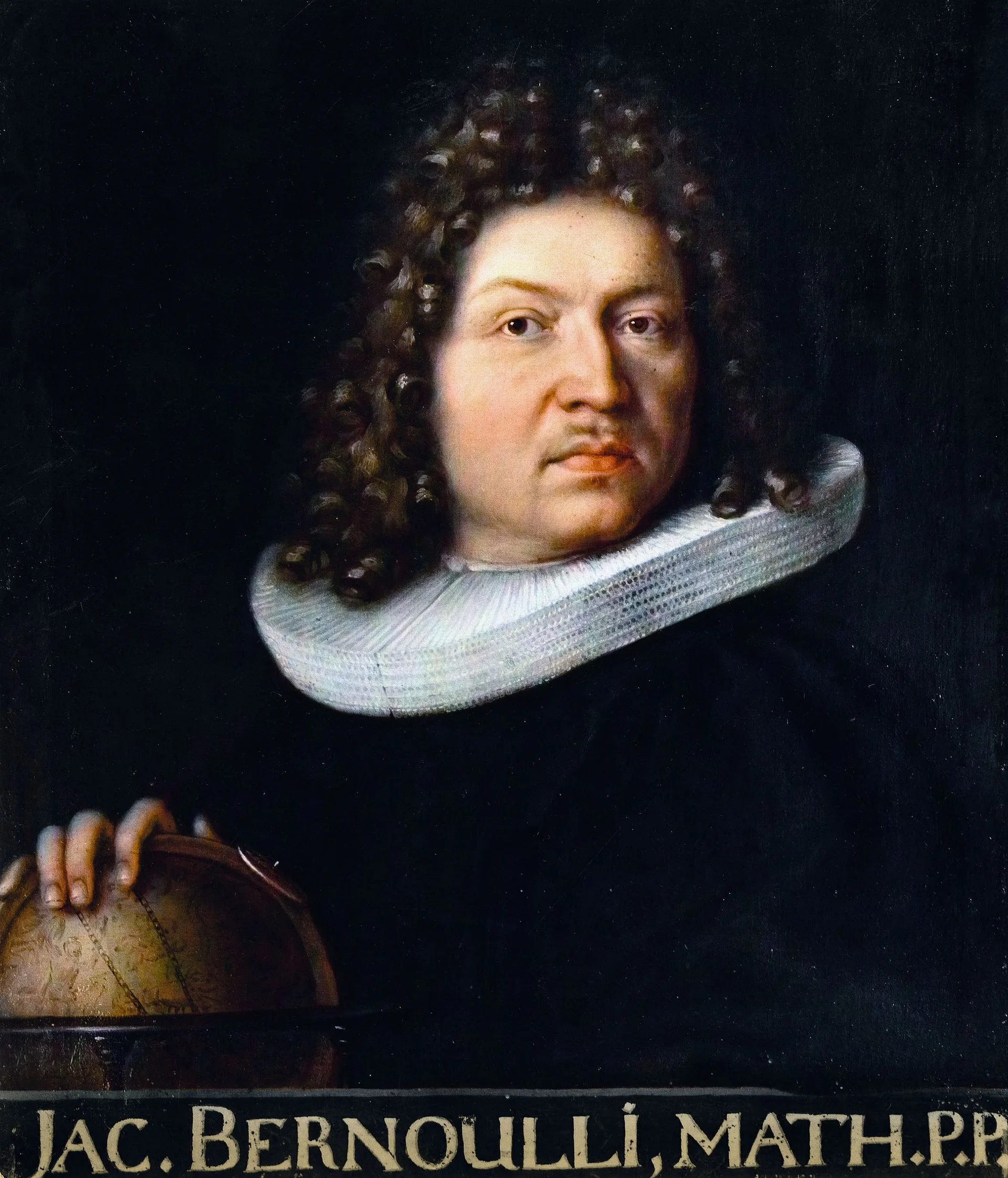
The man who challenged the sky
Jakob's fascination with the unknown was detonated by the Great Comet of 1680. To the Europe of his day, comets were omens of divine wrath. Jakob saw something else: a mechanical puzzle. In 1681 he published a bold pamphlet proposing that comets' paths obeyed natural laws — six years before Isaac Newton formalized his theory in the Principia Mathematica.
Jakob's theory of cometary orbits was not entirely correct. But to state publicly that the heavens followed laws rather than divine whims was a direct affront to the established order — a scientist, in Calvinist Basel, trading fear of the sky for the rigor of calculation.
The Battle of the Letters
Seventeenth-century science lived not in classrooms but at the tip of a quill: the "Republic of Letters," a network of correspondence in which ideas crossed Europe in letters that traveled for weeks. For the Bernoullis, though, the mail was not a bridge — it was a battlefield.
What began as Jakob's tutelage of his brother degenerated into a game of intellectual sadism. One would send a problem of impossible complexity; the other would reply with a solution that secretly contained an even crueler trap. Every folded, wax-sealed sheet carried months of obsession and sleeplessness. The exchange would become known as the Battle of the Letters.
And in 1696, Johann issued the challenge he believed would be the final blow.
The brachistochrone: the challenge that became a sentence
The Brachistochrone Problem asked: along which curve does an object fall from one point to another in the least possible time? The answer is not the straight line intuition suggests — it is an arc that forces mathematics to bend gravity itself.
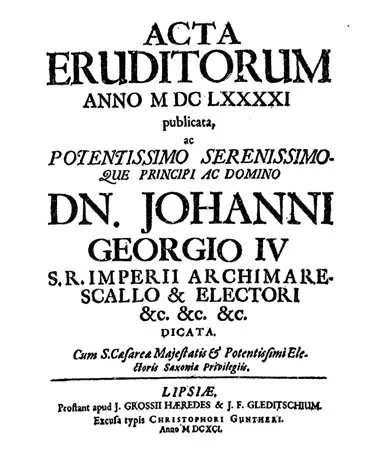
Johann published the challenge in the Acta Eruditorum, the great scientific journal of the age. He wasn't seeking answers: he was seeking a stage. He kept his own solution secret and longed for his older brother to fail in public.
Across the Channel, in London, Isaac Newton solved the puzzle in a single night. But Jakob's answer was of another order. With the patience of a man dismantling a clock, he revealed the cycloid — the curve traced by a point on the rim of a rolling circle — and, in the process, opened an entire branch of mathematics: the calculus of variations.
Johann's solution was elegant. Jakob's was deeper. And the younger brother, faced with that impeccable answer, felt the ground vanish beneath him: his attempted intellectual massacre had become his own public condemnation.
In that house in Basel, the silence between the two brothers became more deafening than any scream.
The Golden Theorem and the slow fever
Jakob spent his final years locked in his study, consumed by a monumental manuscript: the Ars Conjectandi. At its heart lay his greatest obsession — the "Golden Theorem," the proof that absolute chaos does not exist: observed long enough, uncertainty reveals order. It was the birth of the Law of Large Numbers, the foundation of all modern statistics. He meditated on that proof for twenty years.
Jakob died in 1705, at 50, consumed by what the physicians of the day called "a slow fever." The Ars Conjectandi would only see the light eight years after his death.
Johann inherited his brother's chair of mathematics at the University of Basel. But he found no peace: his brother's death turned hatred into an insatiable ghost. Trembling hands, insomnia, deliriums of equations — baffled physicians labeled his condition "black melancholy." And his bitterness found a new target: his own son.
Daniel: the son who became a rival
Daniel Bernoulli was born in 1700 in Groningen, in the Netherlands. His father decreed his destiny — commerce — for the same reason his grandfather had once decreed his. In a bitter compromise, Johann allowed him to study Medicine, certain it would keep him away from numbers.
It was his greatest mistake. Daniel used anatomy as a Trojan horse: in his doctoral thesis on the mechanics of breathing, he secretly applied physics and calculus to the flow of air through the lungs. There, the spark was lit that would one day set science ablaze — the study of fluids.
In 1725, Daniel won the grand prize of the French Academy of Sciences — the very glory his father chased for himself — and was invited to the newly founded Academy of St. Petersburg, under the patronage of Empress Catherine I. And in 1734 came the final blow: father and son competed for the same Paris prize. The verdict was a tie — the prize split between them.
For Johann, being equaled by his own son was not a celebration: it was a betrayal. In a fit of blind fury, he threw Daniel out of the house. And never let him return.
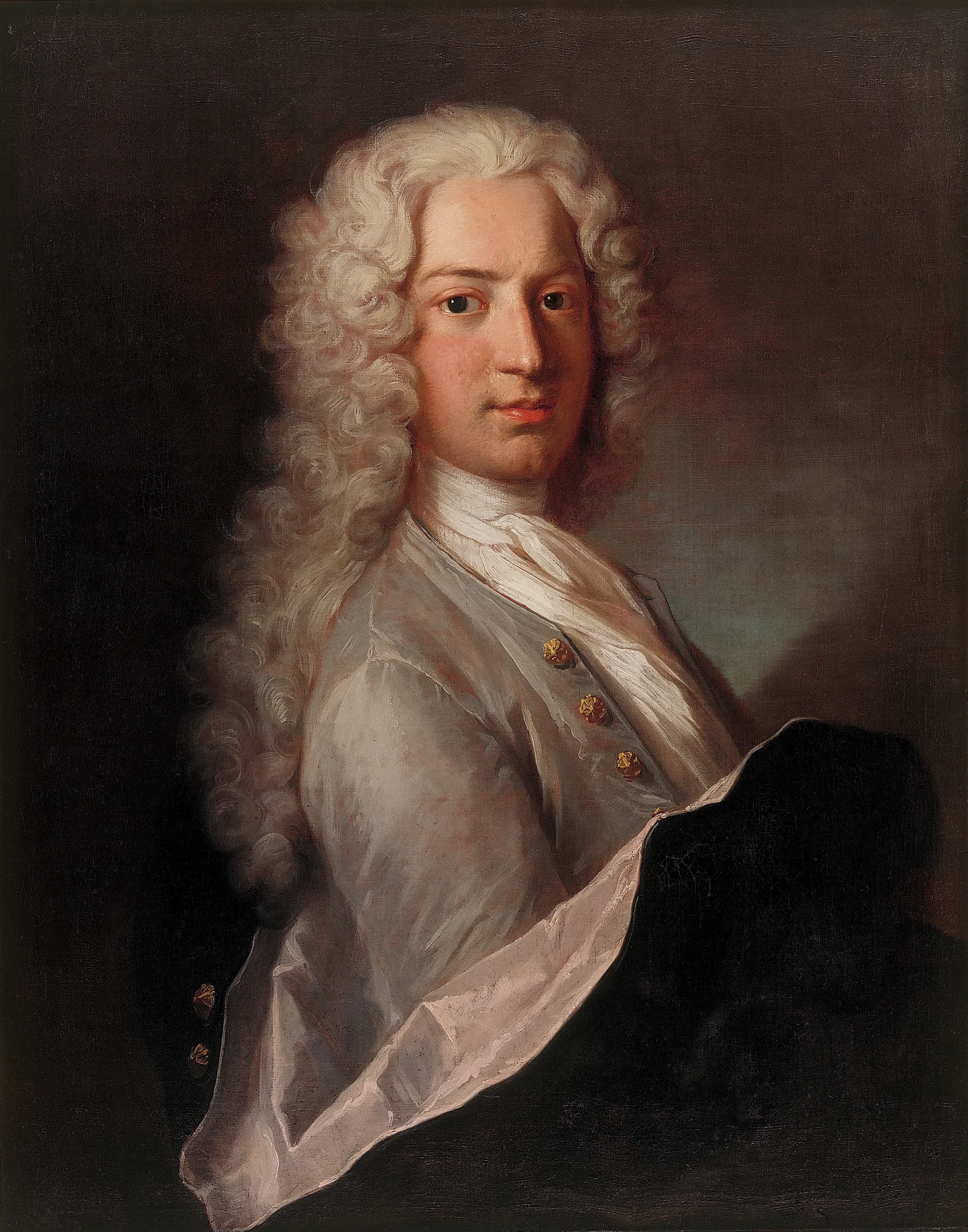
🎬 In the video, this scene — the door closing behind Daniel — gets imagery and score. Watch it at the exact moment: https://www.youtube.com/watch?v=51WDIUYuUfQ
The exile that became freedom
While his father withered in Basel among manuscripts and resentment, Daniel turned exile into liberation. In his St. Petersburg years he developed his masterwork, the Hydrodynamica — the equations describing the behavior of fluids and air that today underpin everything from aviation to medicine. He became his father's antithesis: brilliant, but serene.
Johann died at 80, having devoted his life to proving himself the sovereign of mathematics — and ending it as a prisoner of his own genius: a man who, to protect his throne, chose to reign over emptiness.
What remained
Time has a merciless way of redistributing worth. While the house in Basel crumbled under the weight of resentment, the name Bernoulli conquered eternity: eight remarkable mathematicians in 150 years, and three pillars — Jakob, Johann and Daniel — now recognized as architects of the language in which the universe expresses itself.
There is even a final irony carved in stone. On Jakob's tomb in Basel, the spiral he requested was engraved with the motto Eadem mutata resurgo — "Though changed, I rise again the same." The craftsman, however, carved the wrong spiral: an Archimedean spiral instead of the logarithmic one Jakob loved. Not even in death did the family escape someone else's error of execution.
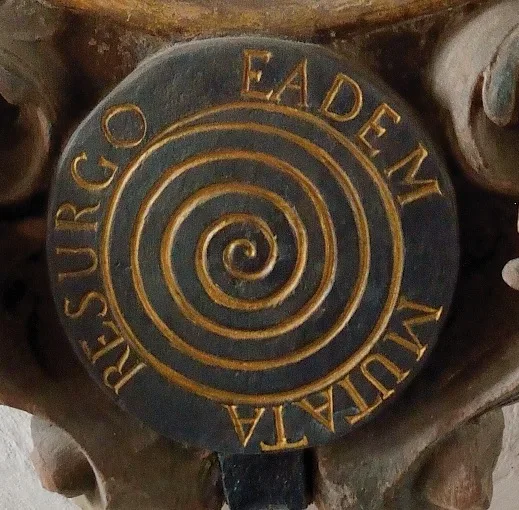
In the end, the Bernoullis left us more than theorems. They left a lesson engraved in the history of science: intellect can defy gravity and time — but true greatness, the kind that survives the centuries, lies in the capacity to overcome one's own ego. They forced reality to bend before logic. Even if, to do it, they had to break themselves.
▶️ Watch the full story
This article was born from the episode "The Genius Family That Destroyed Itself" on the Zigurat channel — documentaries about the lives history preferred to tell only halfway. The video tells this story with reconstructions, an original score and an atmosphere the text can't reach: https://www.youtube.com/watch?v=51WDIUYuUfQ
If this story held you, subscribe to the channel — and explore other episodes of the series on the blog.
Frequently asked questions
Who were the Bernoullis?
A Swiss family from Basel that, between the 17th and 18th centuries, produced eight prominent mathematicians — among them Jakob (Law of Large Numbers), Johann (calculus, the brachistochrone) and Daniel (Hydrodynamica and the Bernoulli principle behind aviation).
What was the brachistochrone problem?
A challenge issued by Johann Bernoulli in 1696: find the curve of fastest descent between two points. The answer — the cycloid — was solved by Newton, Leibniz, Johann and Jakob, whose solution founded the calculus of variations.
Why did Johann Bernoulli throw his son out of the house?
In 1734, Daniel shared the grand prize of the Paris Academy with his father. Johann, unable to accept being equaled by his own son, expelled him from the family home — and they were never reconciled.
Sources & references
- 01 MacTutor History of Mathematics Archive — biographies of Jakob, Johann and Daniel Bernoulli (Univ. of St Andrews)
- 02 *Acta Eruditorum* (1696-1697) — the brachistochrone challenge, digitized archives
- 03 Jakob Bernoulli, *Ars Conjectandi* (1713, posthumous)
- 04 Daniel Bernoulli, *Hydrodynamica* (1738)
- 05 Basel Minster — record of Jakob Bernoulli's tomb and the *Eadem mutata resurgo* spiral

This article started as a video
Subscribe to the channel so you don't miss the next ones.